

Introduction
If you are applying for a Java Programming role, the interviewer will probably like to test your coding skills. You must know some questions that the hiring manager can ask. We suggest practicing before you appear for technical interviews. It will help you to brush up your knowledge and feel more confident.
We have compiled some questions and answers that a Java expert programmer or beginner has to answer in an interview. These questions will help you prepare better.
Top 10 Java Coding Questions For Interviews
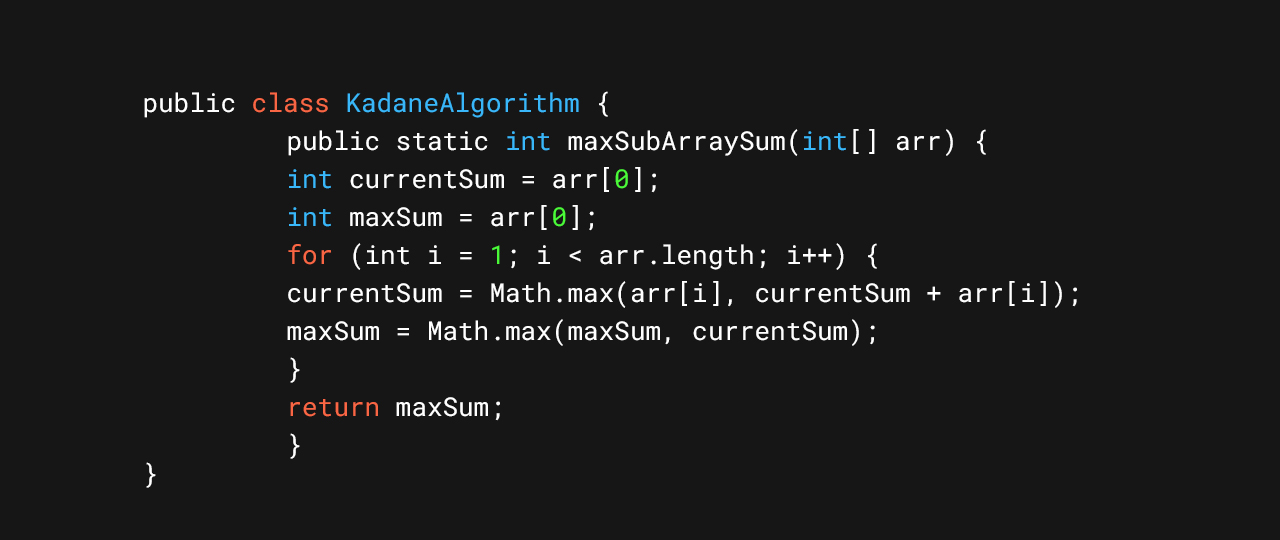
Find the contiguous sub-array that has the maximum sum
Kadane's Algorithm is a fundamental technique for efficiently finding the contiguous subarray with the maximum sum within an array.
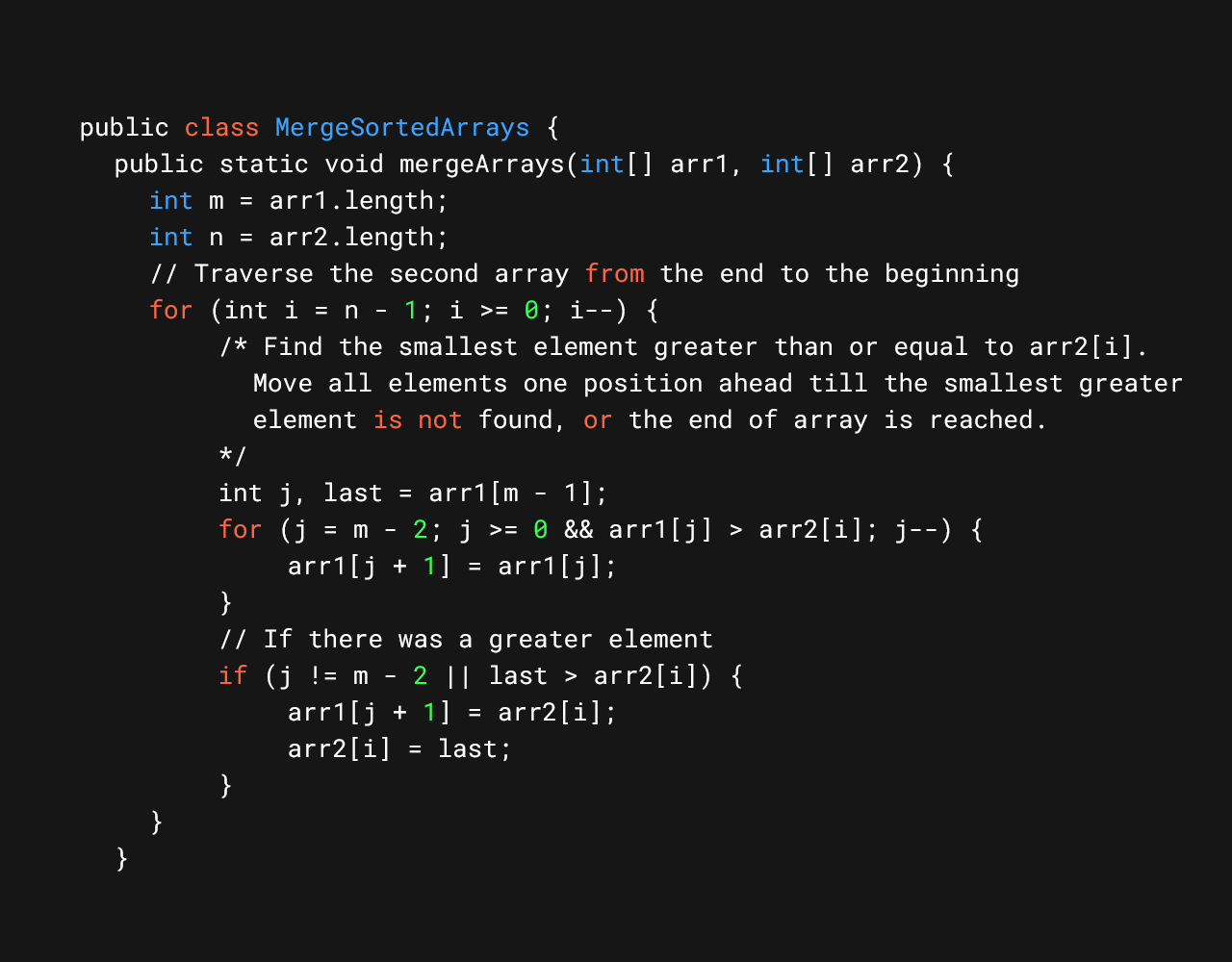
Given two sorted arrays of sizes n and m in increasing order. Merge them in sorted order without using any extra space
The code efficiently merges two sorted arrays, arr1 and arr2, by iteratively traversing arr2 from end to start. For each element in arr2, it identifies the appropriate position in arr1 by shifting elements greater than the current arr2 element. This process ensures space-efficient merging while preserving the sorted order of the arrays.
Find the Kth smallest element in the array
To find the Kth smallest element in the given array, you can use the QuickSelect algorithm. QuickSelect is an in-place variation of the QuickSort algorithm, and it efficiently finds the Kth smallest element in an array.
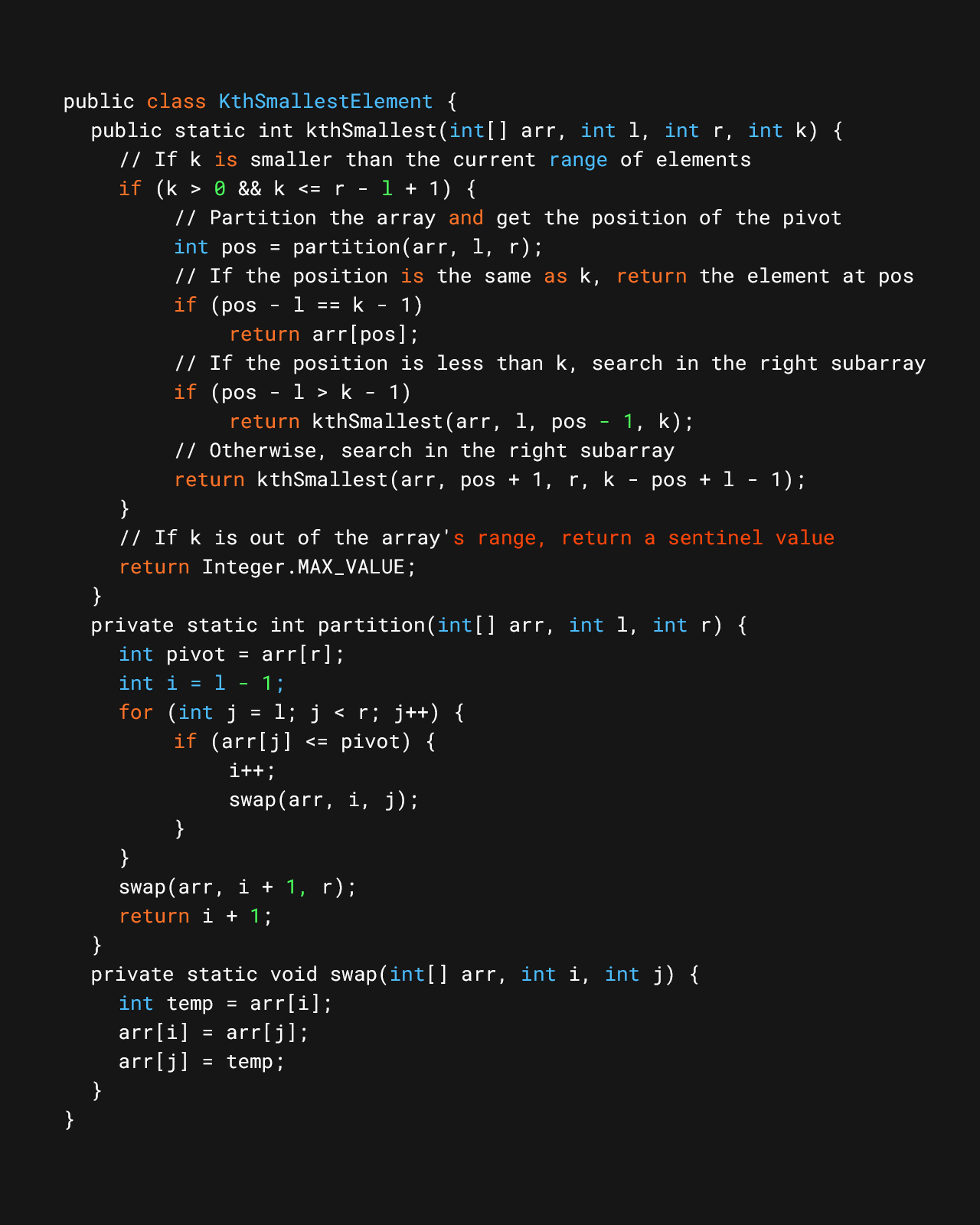
This code includes the kthSmallest method, which takes the array, the starting and ending indices (l and r), and the value of k as parameters. The partition method is used to rearrange the array elements such that elements smaller than the pivot are on the left, and elements greater than the pivot are on the right. The main method demonstrates how to use this algorithm for a sample array and value of k.
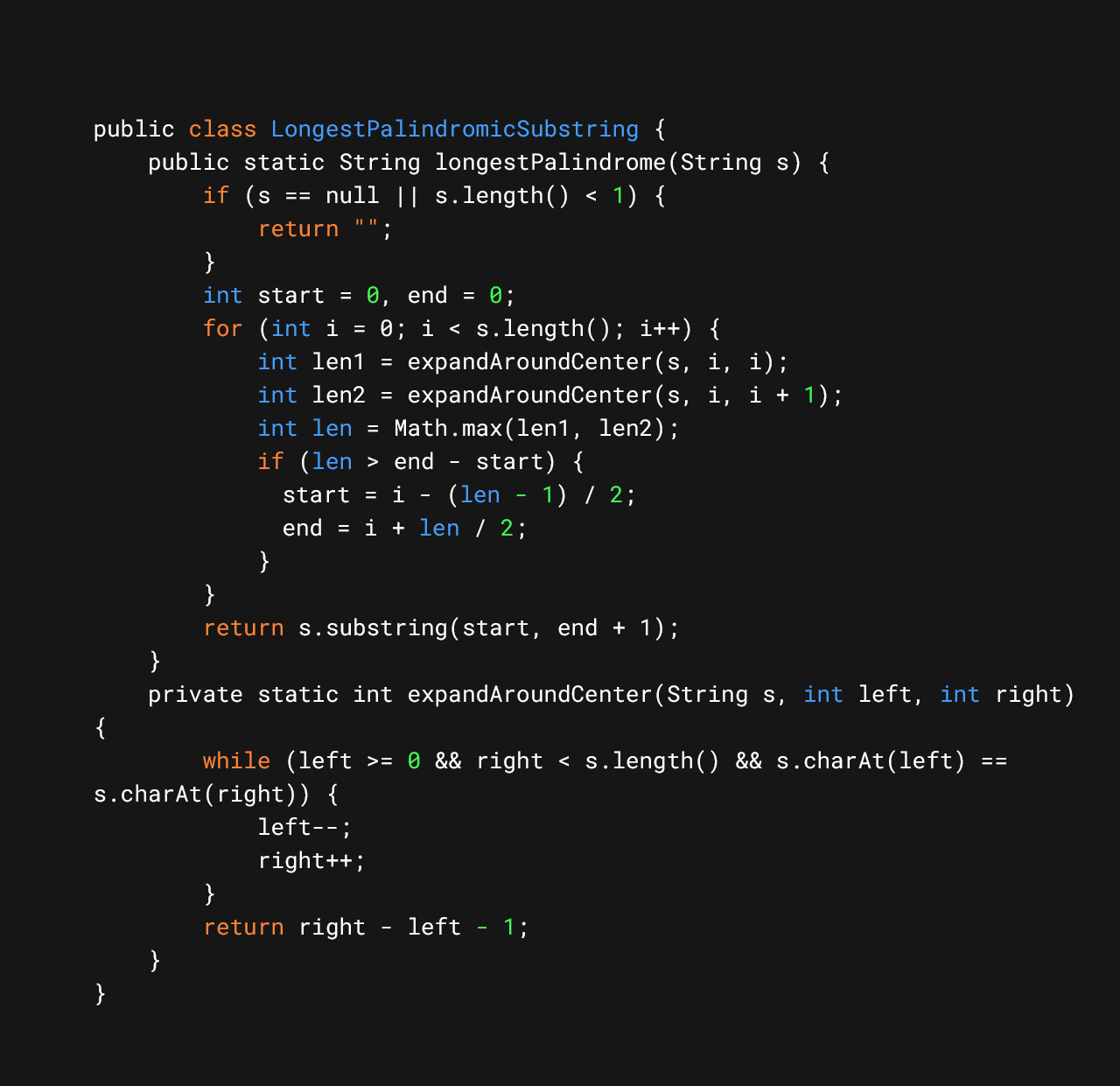
Find the longest palindromic substring in a given string
A palindromic substring reads the same backward as forward. The approach involves iterating through each character in the string and expanding around it to find palindromic substrings of odd and even lengths.
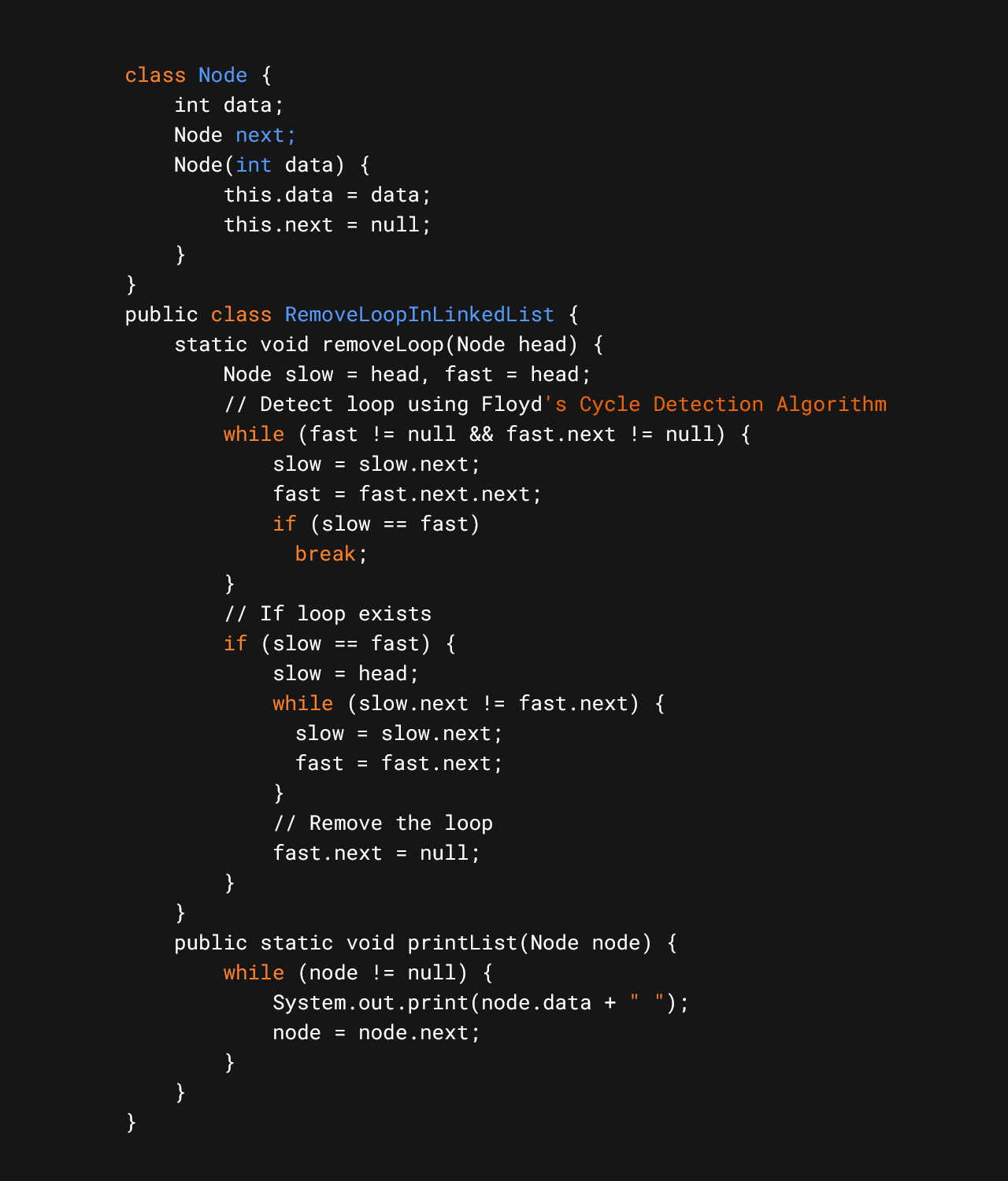
Find and remove loop in Linked List
To remove a loop in a linked list, you can use Floyd's Cycle Detection algorithm. This algorithm uses two pointers: one slow pointer that moves one node at a time and another fast pointer that moves two nodes at a time. If there is a loop, these two pointers will meet at some point in the loop. Once the meeting point is found, we reset one of the pointers to the head and move both pointers one node at a time until they meet again. The meeting point will be the start of the loop. We then iterate until the next of the current node is equal to either of the pointers, indicating the end of the loop. "Difference Between Nested Subquery, Correlated Subquery And Join Operation"
Design an LRU Cache
Here, 'cap' represents the capacity of the cache, and 'Q' indicates the number of queries. Queries can be of two types:
SET x y: This sets the value of the key 'x' to 'y'.
GET x: This retrieves the value of the key 'x' if it is present; otherwise, it returns -1.
The LRUCache class encompasses two methods: get() and set(), defined as follows:
get(key): Returns the value of the key if it already exists in the cache; otherwise, returns -1.
set(key, value): If the key is already present, it updates its value. If not present, it adds the key-value pair to the cache. If the cache reaches its capacity, it should invalidate the least recently used item before inserting the new item.
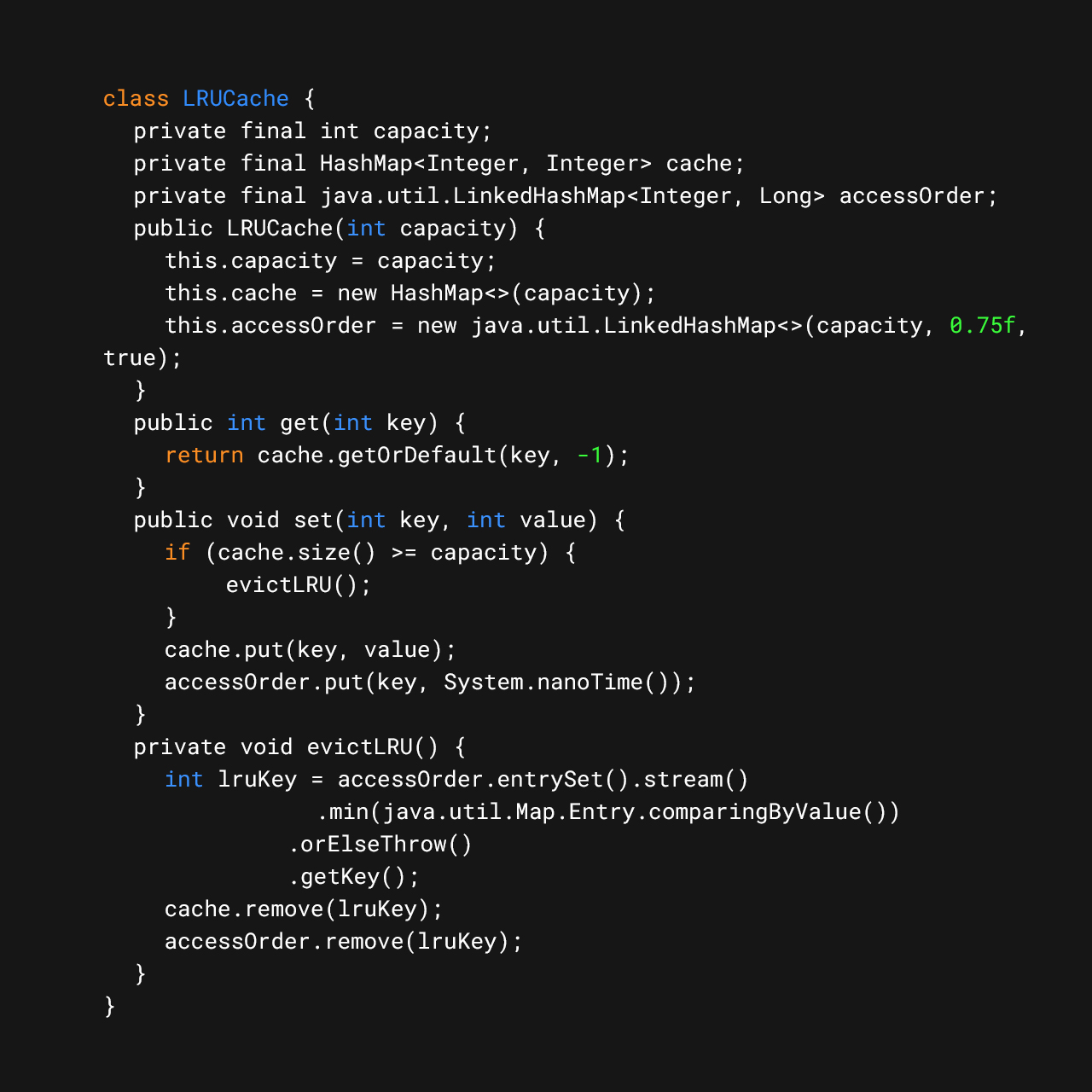
This implementation uses a combination of HashMap for constant-time lookups and a LinkedHashMap to maintain access order for LRU eviction. The evictLRU method is triggered when the cache reaches its capacity, removing the least recently used item.
Read More: "Performance Tuning in Java: Tips and Techniques"
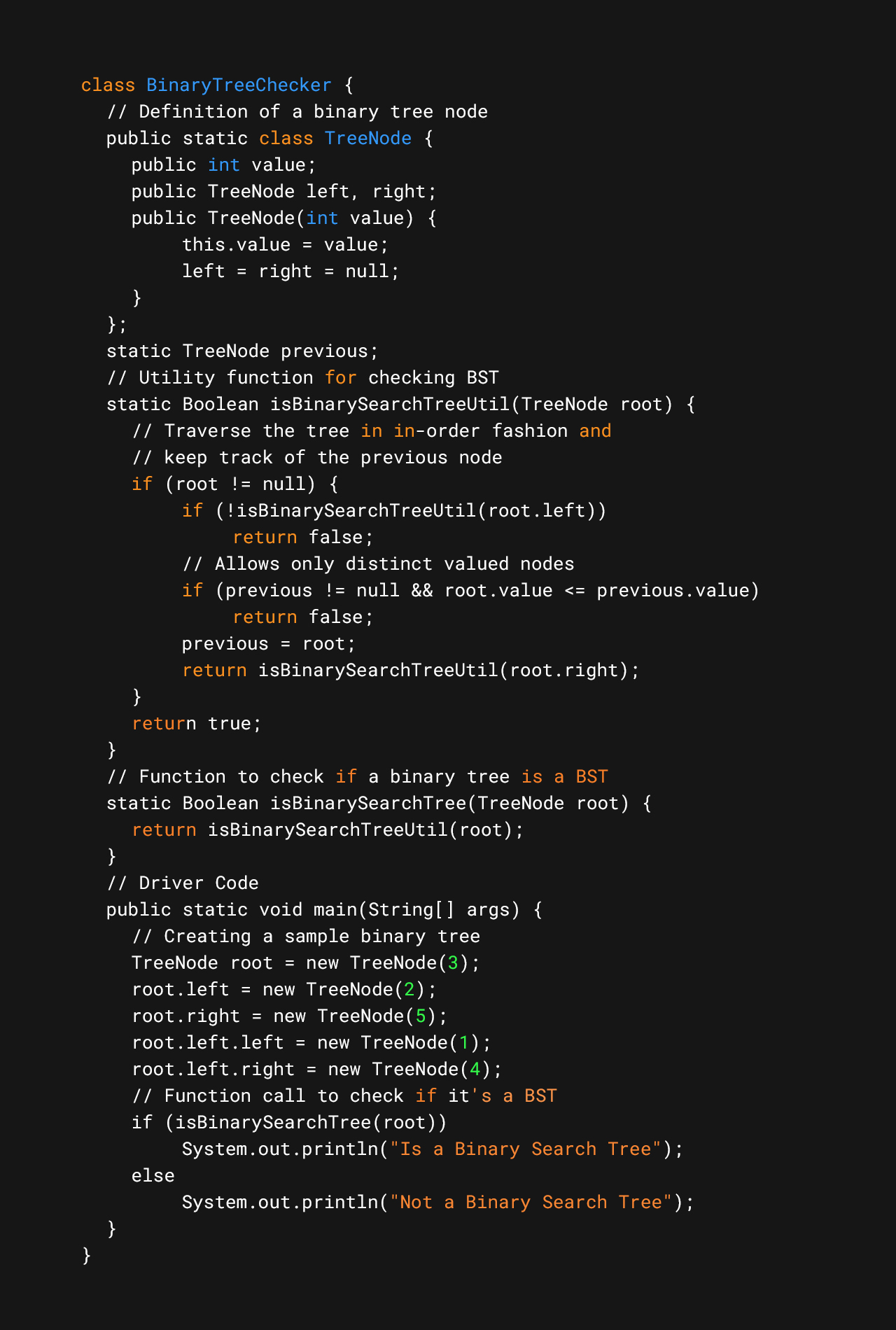
Check whether a binary tree is a BST or not
The provided Java program checks whether a given binary tree is a Binary Search Tree (BST) without using an auxiliary array. It employs an in-order traversal approach and keeps track of previously visited nodes. If the value of the currently visited node is less than the previous value, the tree is not a BST.
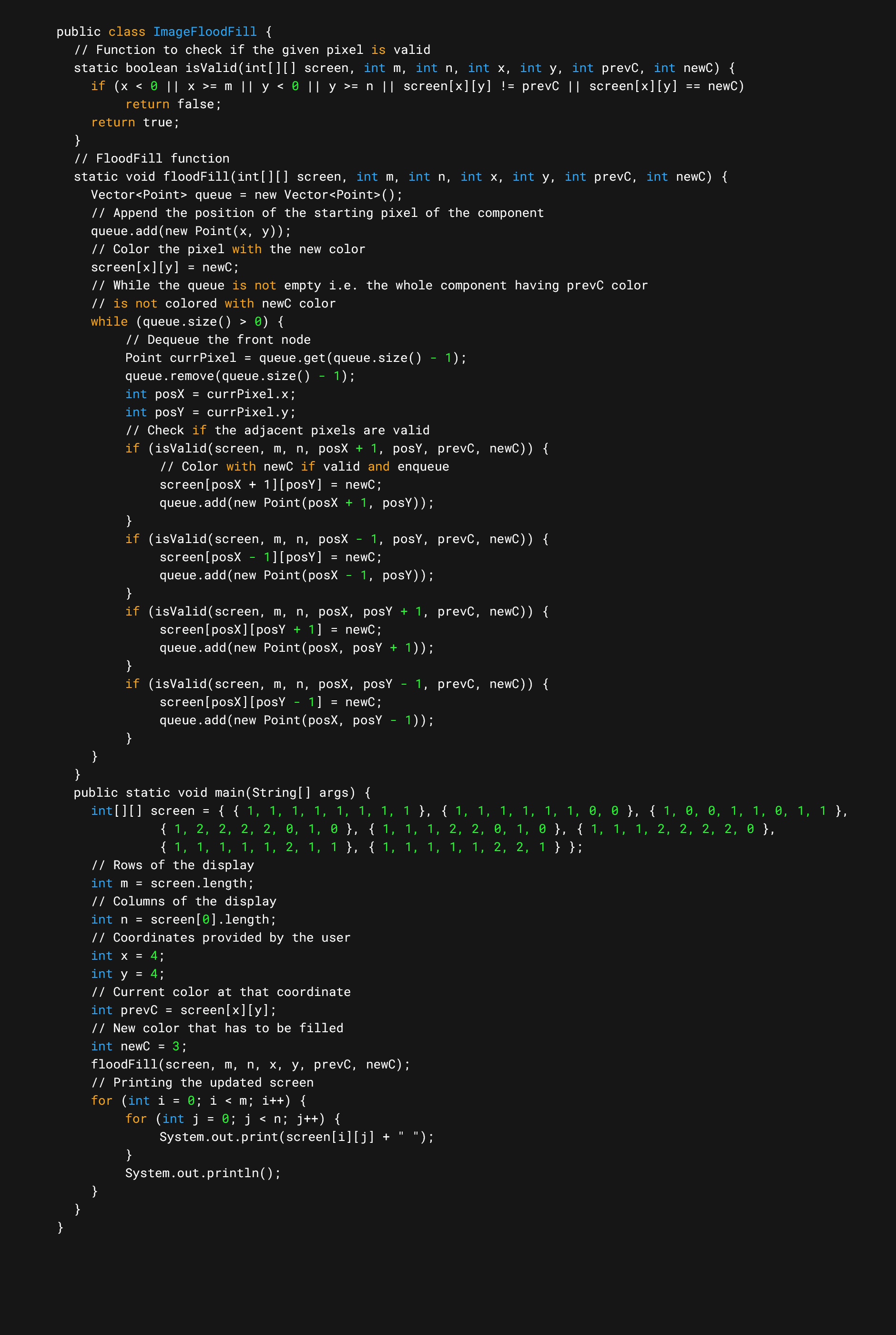
Given a 2D screen replace the color of the given pixel and all the adjacent same-colored pixels with the given color
This Java program uses the Flood Fill algorithm to change the colors of connected pixels in a 2-D array representing an image. The starting pixel's color and the new color are specified, and the algorithm modifies the image accordingly.
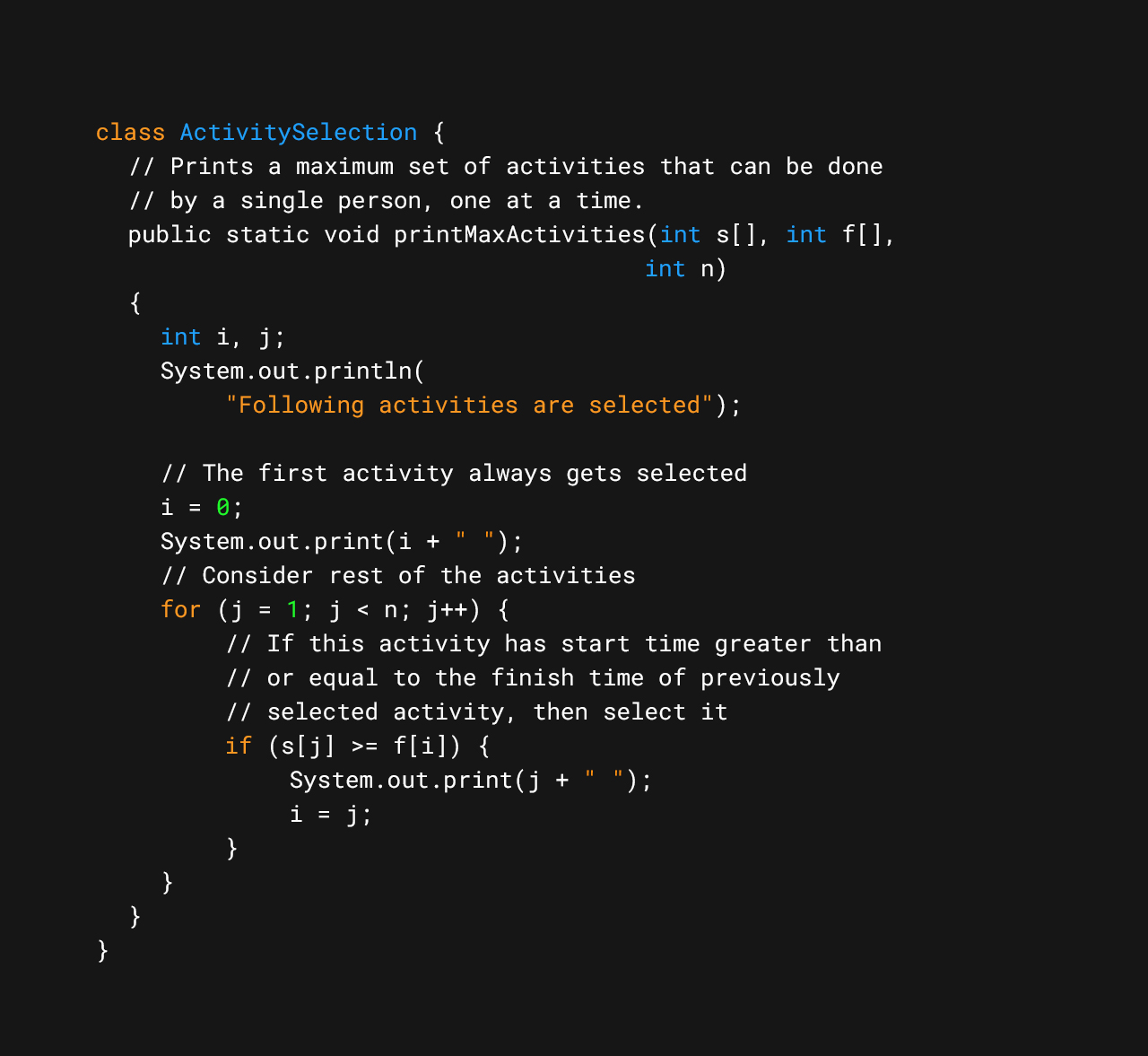
Given N activities with their start and finish day given in array start[ ] and end[ ]. Select the maximum number of activities that can be performed by a single person, assuming that a person can only work on a single activity at a given day.
The ActivitySelection class uses the Greedy Algorithm for Activity Selection. The goal is to select the maximum number of activities that can be performed by a single person, given the constraints that a person can only work on a single activity on a given day. The algorithm sorts the activities based on their finish times and selects activities that do not overlap with each other.
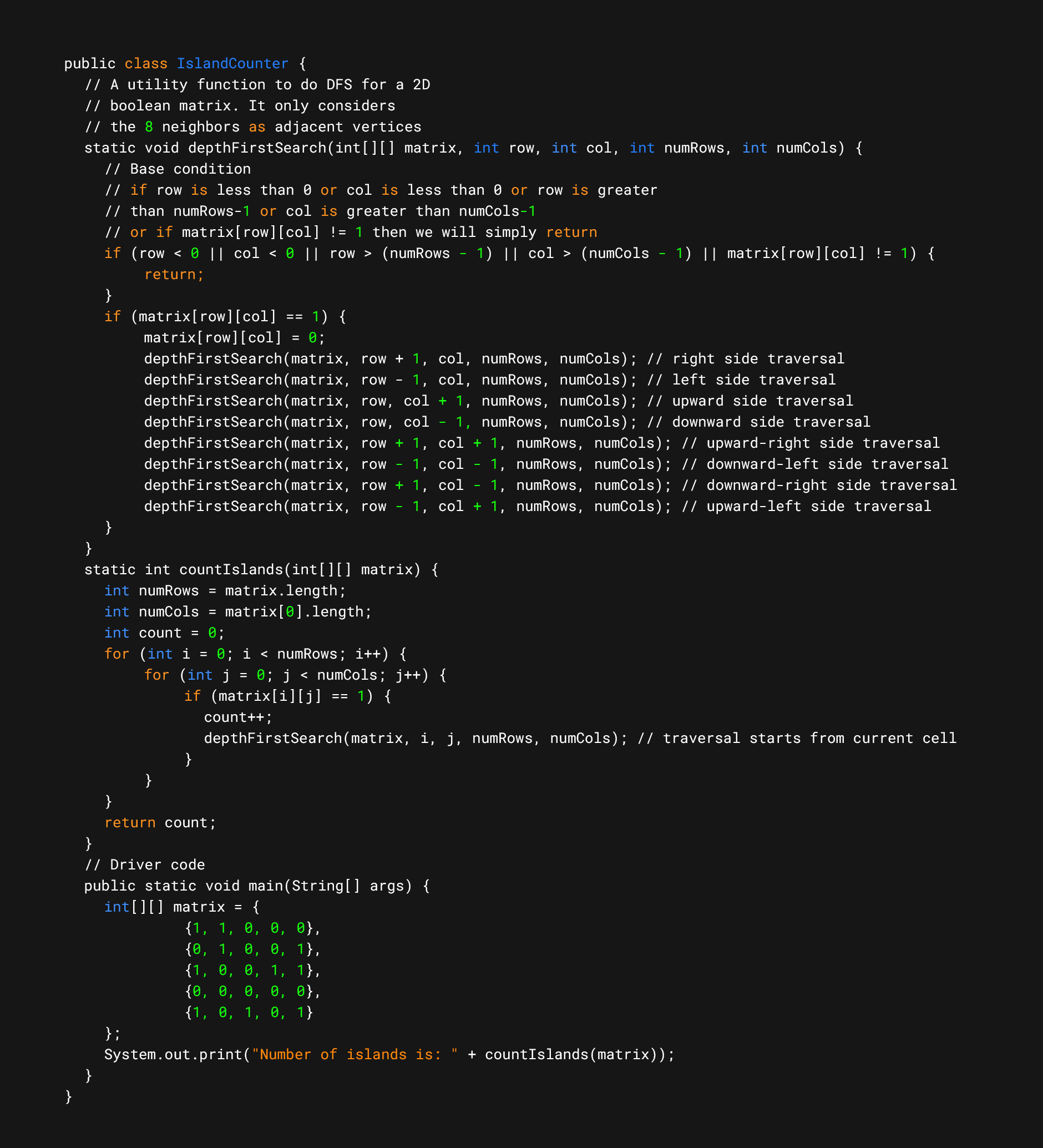
Find the number of islands in a graph.
The IslandCounter class implements an algorithm to find the number of islands in a graph. It uses Depth-First Search (DFS) to traverse the connected land cells and count the number of distinct islands.
Conclusion
We hope the questions discussed in this article will help you prepare better for your interviews. It's not just about challenges; it's about mastering Java and being ready for anything the coding world throws at you.
Read Future of Java , for Java Latest trends and Technologies. Explore, practice, and thrive with Cogent University, your gateway to coding excellence. Visit our website to read more insightful blogs.



.png)
