

Introduction
Every promotion cycle produces the same quiet confusion among junior developers. They shipped what they were asked to ship. They fixed bugs. They worked late during releases. And yet, when titles changed, their name wasn’t on the list.
The gap is rarely technical. It’s perceptual.
Early-career developers tend to believe promotions are retrospective rewards for effort and correctness. In reality, promotions are forward-looking risk decisions. Managers are not asking whether you performed well in the past. They are asking whether giving you more scope will increase or decrease future uncertainty.
That distinction explains most stalled careers.
Technical competence gets you hired. Predictability gets you promoted.
Once you meet the baseline for code quality, your output ceases to be the primary signal. What replaces it is something more subtle and far more decisive: whether the people above you trust your judgment when conditions are unclear, constraints change, or pressure rises.
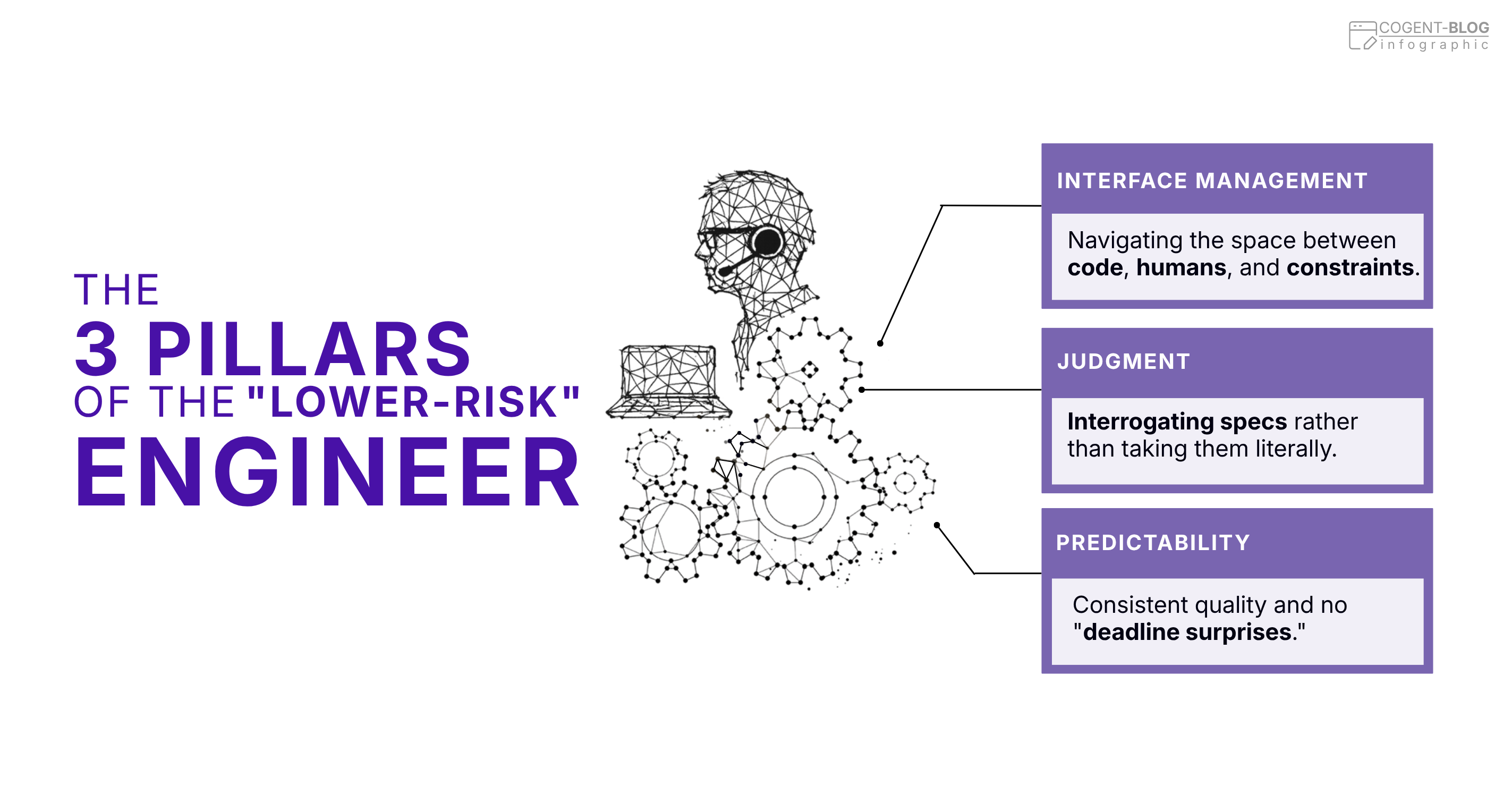
This is where most junior developers misdiagnose the problem. They assume the solution is to become better engineers. What they actually need to become is lower-risk engineers.
The Hidden Metric: Managerial Cognitive Load
Every engineering manager operates under constant cognitive pressure. They track deadlines, dependencies, stakeholder expectations, team morale, and production risk, often simultaneously. Promotions are granted to developers who reduce that burden, not increase it.
A junior developer who writes strong code but requires frequent clarification, late escalation, or post-hoc correction adds load. A developer whose code is merely solid but who consistently surfaces risks early, frames trade-offs clearly, and closes loops independently reduces it.
From the outside, these two developers may appear equally productive. Inside promotion discussions, they are not evaluated remotely the same.
This is why “soft skills” is the wrong term. The behaviors that drive promotion are not soft. They are operational.
Why Output Stops Being the Differentiator
Most junior developers overestimate how much their raw output matters once they are on the team. This is not because output is unimportant, but because it is expected. Modern hiring already filters for baseline competence. By the time promotion is on the table, nearly everyone is shipping.
What differentiates candidates is not how much they deliver, but how safely they deliver it.
Managers pay close attention to patterns. Does this developer clarify intent before executing, or do they build first and ask later? Do they flag uncertainty early, or absorb it until deadlines slip? When something breaks, do they communicate calmly and clearly, or does the situation become harder to manage simply because they are involved?
These patterns determine how much autonomy a developer can be given. Autonomy determines scope. Scope determines level.
The Real Reason Soft Skills Matter Early
There is a persistent belief that communication, ownership, and influence matter only once leadership titles appear. This belief is not just wrong; it is backwards.
The jump from junior to mid-level is often the most communication-heavy transition in an engineering career. At this stage, developers are no longer evaluated solely on task completion. They are evaluated on their ability to operate without constant supervision.
Code reviews become a litmus test. Not for syntax or architecture, but for judgment. Can you explain why a decision was made? Can you respond to critique without defensiveness? Can you distinguish preference from requirement?
Requirements discussions are another filter. Junior developers who take specs literally are often seen as less capable than those who interrogate them. Ambiguity is not a failure of process; it is a feature of real-world product development. Developers who navigate it well are trusted with more.
None of this requires managing people. All of it requires managing interfaces, between code, humans, and constraints.
Reliability Is Not Effort
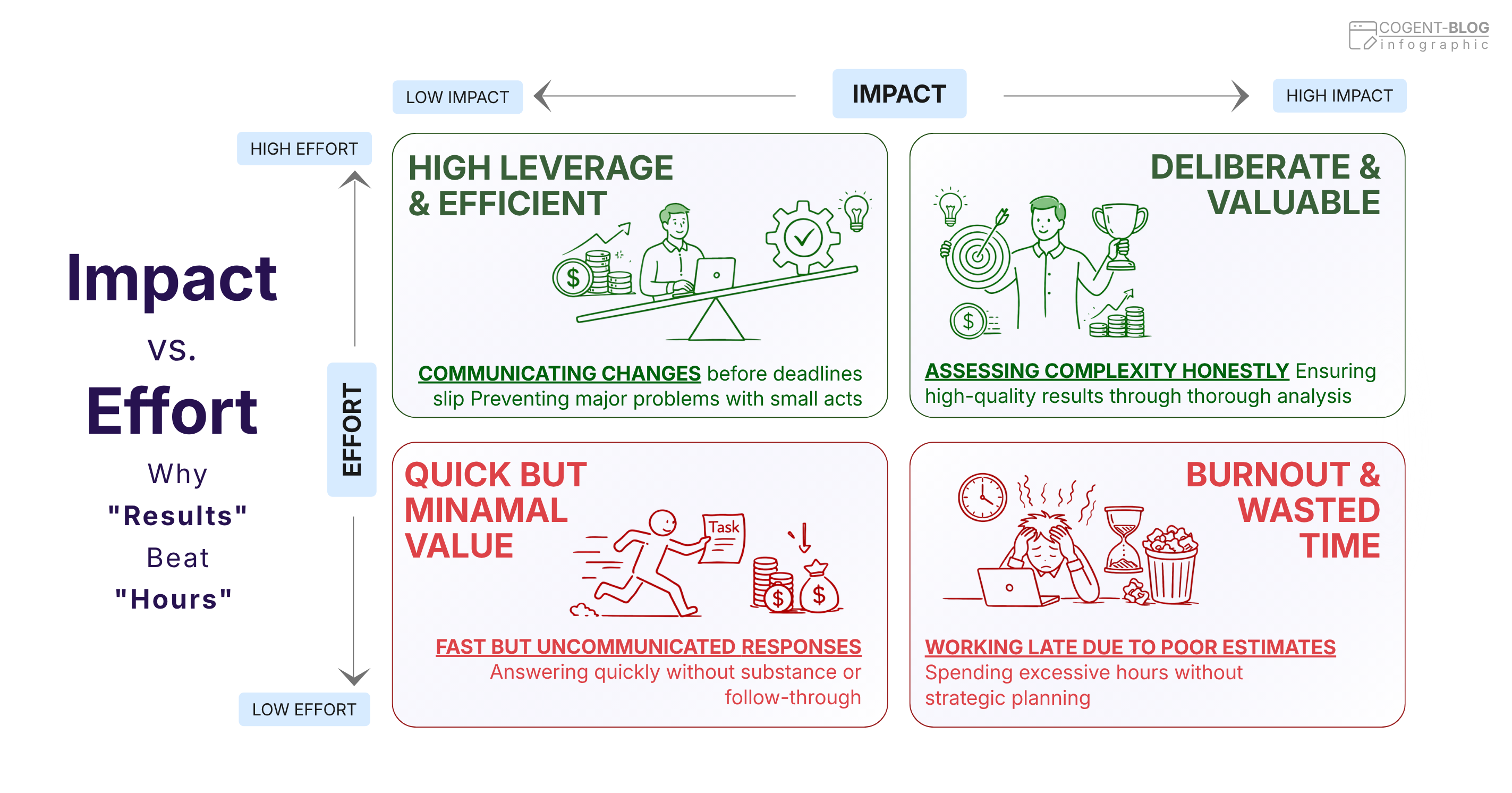
Another common misconception is that commitment is proven through visible effort. Long hours. Fast responses. Constant availability.
From a promotion standpoint, this is largely irrelevant.
What managers care about is not how hard you worked, but whether outcomes were predictable. A developer who regularly works late because estimates were wrong or risks went uncommunicated is not demonstrating dedication. They are demonstrating poor judgment under uncertainty.
Time management, at this level, is not personal productivity. It is expectation management. It is the ability to assess complexity honestly, negotiate scope intelligently, and communicate changes before they become problems.
Developers who do this consistently are trusted with larger, messier work. Those who do not are kept on well-defined tasks, regardless of how many hours they log.
Feedback as a Promotion Signal
Feedback is another area where junior developers misread the signal.
High performers do not receive less feedback. They receive more of it, earlier, and in more nuanced forms. The difference is in how they respond.
Developers who treat feedback as evaluation tend to defend or withdraw. Developers who treat it as calibration ask clarifying questions, apply changes visibly, and follow up.
Managers notice this immediately. A developer who converts feedback into behavioral change is seen as investable. A developer who internalizes it emotionally is seen as fragile. This distinction weighs heavily when considering whether to expand someone’s scope.
Leadership Without Authority
Most promotions are preceded by a period where the developer is already behaving at the next level.
This does not mean dominating discussions or taking over decisions. It means quietly improving how work flows through the team. Owning a small system end-to-end. Writing documentation no one asked for but everyone uses. Helping a teammate resolve an issue faster than expected. Identifying a recurring problem and fixing it without escalation.
These actions rarely appear in sprint metrics, but they fundamentally change how a developer is perceived. They shift the narrative from “executes assigned work” to “raises the team’s baseline.”
Once that narrative exists, the title change becomes a formality.
How Promotions Actually Happen
When promotion discussions occur, they are rarely debates about code quality. They are conversations about risk.
Can this person handle more ambiguity?
Will this person surface problems early?
Do things feel calmer or more chaotic when they are involved?
These questions are answered long before the meeting happens. They are answered through everyday interactions, small decisions, and repeated behaviors.
This is why junior developers who focus exclusively on technical growth often stall. They are optimizing the wrong dimension.
The Only Mental Model That Matters
If there is one model worth internalizing, it is this:
Promotions happen when your manager stops worrying about you. Not because you disappear, but because you have become predictable under pressure, clear under ambiguity, and reliable across changing constraints. Code remains essential. It always will. But in modern engineering organizations, it is only half the job. The other half is whether people trust you to carry weight without creating drag.
That is the difference between a capable junior developer and a promotion-ready one.
Ready to dive deeper?
Explore more insights like this on engineering growth, promotions, and real-world career leverage at Cogent University.
Read more articles and start building the skills that actually move your career forward.



.png)
