

Why 2026 Will Be a Make‑or‑Break Year for Developers
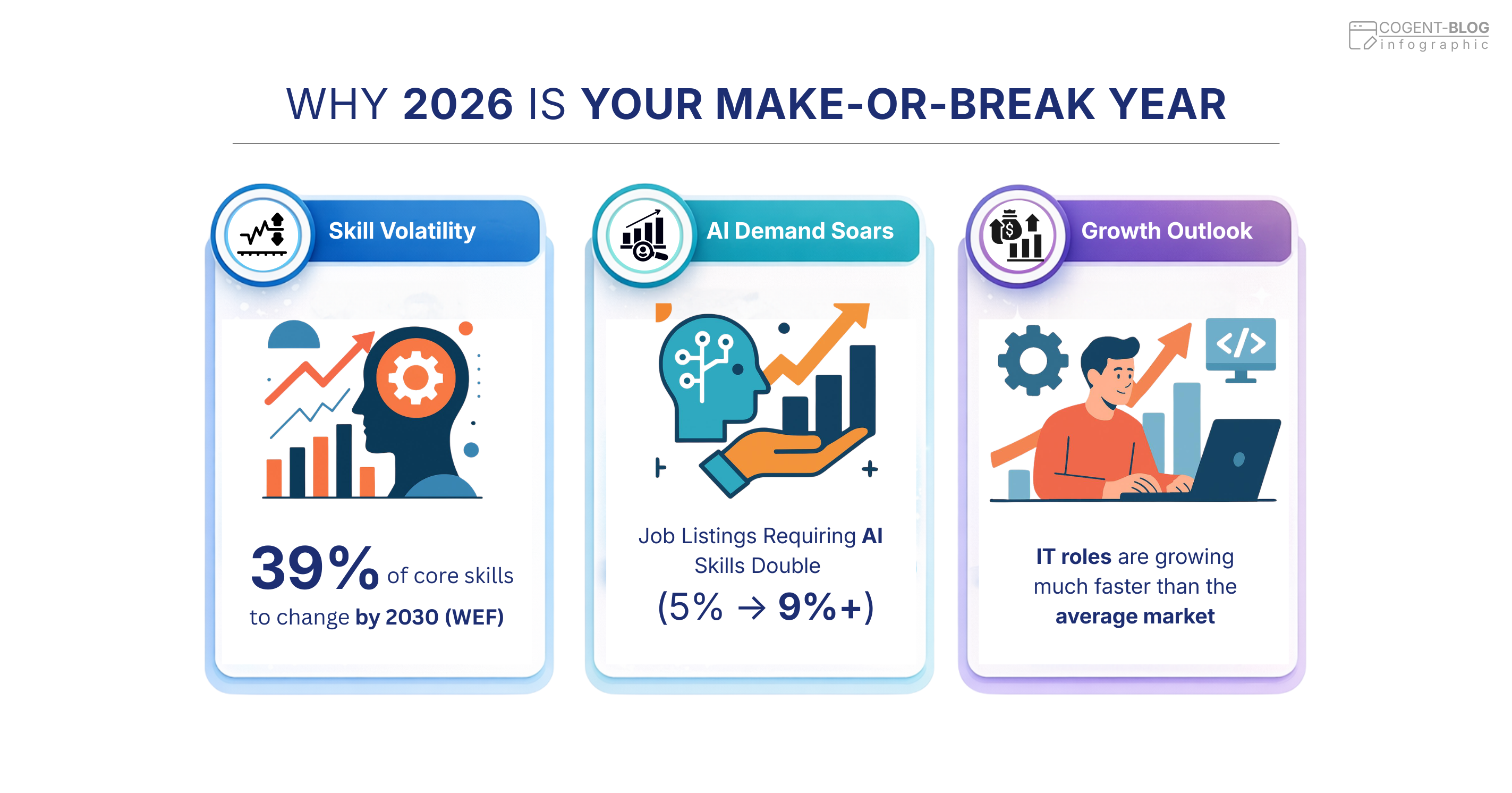
The technology job market is in flux. The World Economic Forum’s Future of Jobs 2025 report warns that 39 % of workers’ core skills will change by 2030, while employers rank analytical thinking, resilience, and flexibility as critical abilities. Indeed’s analysis shows that job postings requiring AI nearly doubled from about 5% in 2024 to over 9% in 2025, and the U.S. Bureau of Labor Statistics projects that computer and IT roles will grow much faster than the overall job market.
These numbers reflect a market that punishes stagnation and rewards adaptability. Layoffs, remote work, and fast‑moving automation mean coders must constantly refresh their skills. This guide highlights ten technical domains poised to dominate the U.S. developer job market in 2026. Each section explains why the skill is important and offers a simple first step to begin learning, so you can navigate uncertainty with purpose.
1. AI & Generative AI Engineering
AI is reshaping software development and business operations. Indeed’s data shows that job postings requiring AI skills rose from ~5% in 2024 to over 9% in 2025, and the World Economic Forum lists AI and big data as the fastest‑growing technical domains. AI engineers design chatbots, copilots, and retrieval‑augmented systems using models from providers such as OpenAI and Anthropic. They primarily work in Python and JavaScript and orchestrate models using frameworks such as LangChain. To get started, learn how large language models operate and experiment with a public API to build a tiny bot. Understanding the basics will soon be as indispensable as knowing how to use Git.
2. Machine Learning & MLOps
Machine learning underpins recommendation engines, fraud detection and predictive analytics. Alexander Group estimates that the ML sector will reach roughly $568 billion by 2031, adding over 219,000 roles in a year, and the WEF notes AI and big data as high‑growth skills. ML engineers build and tune models, while MLOps specialists handle data validation, model versioning, deployment and monitoring. Tools like scikit‑learn, PyTorch, MLflow and Docker make this possible. Begin by revisiting regression and classification and deploy a simple model as an API. A small end‑to‑end project teaches the workflows employers seek.
3. Cloud‑Native & Multi‑Cloud Engineering
Cloud skills are now a baseline. Job postings mentioning Google Cloud rose from about 3 % to over 5 % in a year, while AWS mentions increased from over 12 % to nearly 14 %. Companies are migrating workloads and need engineers comfortable with containers, microservices and serverless functions. Multi‑cloud expertise helps avoid vendor lock‑in, and FinOps skills allow teams to control spiralling costs. Learn one provider (AWS, Azure or GCP), deploy a small app, then containerise it with Docker and explore cost dashboards. These foundations prepare you for cloud‑native roles that will continue to expand into 2026.
4. Cybersecurity & Secure Coding
Cyber threats are escalating alongside AI adoption. Job postings requesting cybersecurity skills doubled from around 2 % in 2024 to over 4 % in 2025, and cybersecurity employment is projected to grow 29 % by 2034. Developers must embed security into code and infrastructure. Understanding the OWASP Top 10, encryption, identity management and secrets handling is essential. Familiarity with static analysis, dependency scanning and secret detection tools helps catch vulnerabilities early. Start by reviewing common attack vectors and hardening a side project with authentication and input validation. Secure coding habits will protect you and your users.
5. Data Engineering & Analytics
Clean, well‑structured data fuels every AI and analytics initiative. The WEF ranks analytical thinking as the top core skill, while the CIO study shows analysis skills were required in over 19 % of tech postings in 2024 and over 21 % in 2025. Data science careers are expected to grow 34 % over the next decade. Data engineers build ETL and streaming pipelines, manage warehouses like Snowflake or BigQuery and ensure data quality. Master SQL joins and window functions, write a small pipeline that ingests and cleans data, and then explore a cloud warehouse. These steps lay a foundation for analytics roles that are in hot demand.
6. DevOps, SRE & Platform Engineering
The shift to continuous delivery means DevOps skills are prized. Indeed found that CI/CD requirements in job postings increased from under 7 % in 2024 to over 9 % in 2025. DevOps engineers, Site Reliability Engineers (SREs) and platform engineers build pipelines, automate infrastructure and implement observability. They use GitHub Actions or Jenkins, Infrastructure as Code tools like Terraform and monitoring stacks such as Prometheus and Grafana. To sample this field, automate tests and deploy a small application with a CI service, then define its infrastructure with code and add basic monitoring. Learning to balance speed and reliability will make you valuable in any organisation.
7. Full‑Stack Web & API Development
Traditional software development still drives most digital products. U.S. data shows continued strong demand for software developers and engineers, especially those who can work across the stack. Full‑stack developers build user interfaces using React or Vue, implement business logic in Node.js, Java or Python, design databases and expose APIs via REST or GraphQL. They also ensure accessibility, performance and security. To strengthen your full‑stack skills, create a small CRUD application with authentication, deploy it to the cloud and pay attention to user experience. Demonstrating end‑to‑end capabilities remains a core asset.
8. Low‑Code/No‑Code & Automation
Low‑code isn’t just for non‑technical users. Analysts predict that 75 % of new business applications will be built using low‑code platforms by 2026, and Gartner estimates 70–75 % of enterprise apps will use low‑code or no‑code. With AI assistance, these platforms can reduce development costs by up to 60 %. For developers, low‑code tools like Power Platform, Zapier or n8n help automate repetitive tasks, build dashboards quickly and prototype ideas. Start by automating a mundane process sending daily reports or syncing data and then build a simple internal tool. Low‑code proficiency multiplies productivity and complements traditional coding.
9. Blockchain & Smart Contract Development
Blockchain is moving beyond crypto hype into practical use cases. Adoption is growing at over 60 % annually, and spending on blockchain infrastructure is set to exceed $400 billion by 2030. Reports suggest that by 2026 blockchain will underpin tax collection and trade settlement, with 80 % of logistics firms using blockchain for provenance. Developers build supply‑chain transparency systems, tokenise assets and implement decentralised identity with smart contracts written in Solidity or Rust. To explore, understand how blockchains achieve consensus, deploy a simple contract on a test network and connect it to a minimal front‑end. An awareness of blockchain fundamentals is increasingly relevant for regulated industries.
10. AR/VR & Spatial Computing
Immersive technology is gaining traction across healthcare, education and retail. Grand View Research values the spatial computing market at USD 102.5 billion in 2022, rising to USD 469.8 billion by 2030, a CAGR of 20.4 %. Growth drivers include improved hardware, better software tools and demand for remote collaboration. Developers use engines like Unity or Unreal, languages like C# and C++ and frameworks such as WebXR to create 3D experiences. Beginners can follow tutorials to build a simple scene, add interaction and experiment with AR using ARCore or ARKit. Familiarity with spatial computing will open doors in training, simulation and digital twin projects.
Bonus: AI Collaboration & Durable Skills
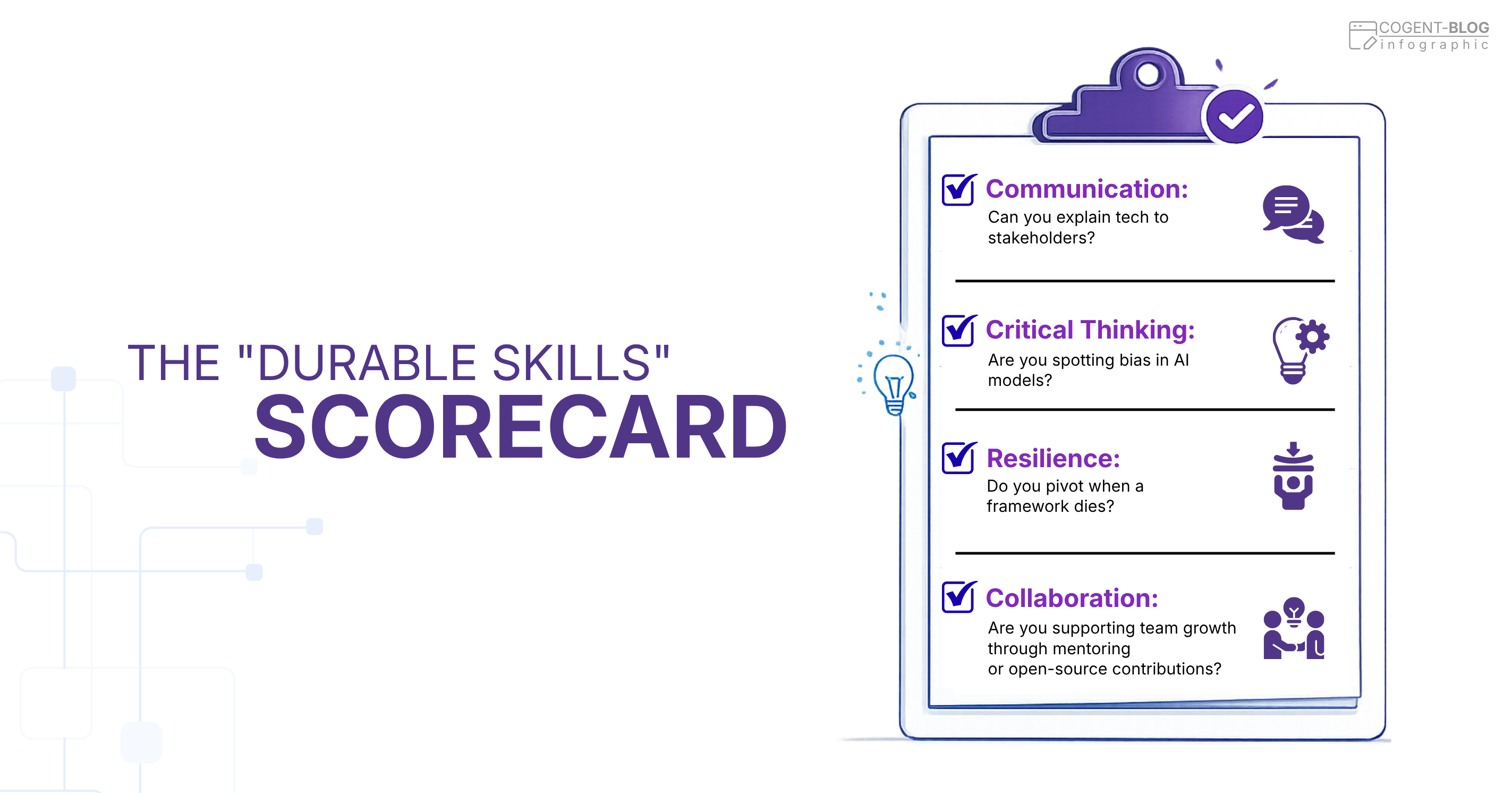
Technical know‑how alone doesn’t guarantee job security. Employers consistently list soft skills, communication, critical thinking, adaptability, emotional intelligence and leadership as top priorities. The WEF’s survey highlights resilience, flexibility and leadership among its highest‑ranked core skills. Saphyte’s analysis notes that the uncertainty of 2025 increased demand for collaboration and adaptability.
Developers who pair technical expertise with these durable skills can better navigate AI‑driven change. Communicating clearly ensures that projects meet real needs, critical thinking reduces biases in models, emotional intelligence fosters healthy team dynamics and adaptability allows you to pivot to new tools or frameworks. You can cultivate these traits by seeking feedback, writing about what you learn, collaborating on open‑source projects and mentoring others. They will enhance any technical skill you acquire.
Combining Skills: Building Your Learning Path
You don’t have to learn all ten domains. Most professionals can effectively master two or three complementary skills over 12–18 months while working full‑time. Example tracks include:
- AI Engineer Track: Focus on AI & generative AI, machine learning, and cloud deployment to build intelligent, scalable systems.
- Cloud/DevOps Track: Combine cloud‑native engineering, DevOps/SRE and cybersecurity to design, deploy, and secure infrastructure.
- Data Track: Pair data engineering with machine learning and cloud skills to own the end‑to‑end data lifecycle.
- Product Engineer Track: Blend full‑stack development, low‑code automation and secure coding to build applications rapidly.
Choose a path that aligns with your interests, set realistic learning goals, and focus on projects rather than certificates. Documenting your work publicly, on GitHub or a personal blog, will help you stand out to employers.
Conclusion & Call to Action
The job market in 2026 will reward developers who combine technical breadth with adaptability. Data shows that AI, machine learning, cloud computing, cybersecurity, data engineering, DevOps, full‑stack development, low‑code automation, blockchain, and spatial computing are growing quickly. At the same time, durable skills such as communication and resilience become increasingly important.
Instead of trying to master everything, select a few skills that genuinely interest you. Start with small projects: build a chatbot, deploy an app, automate a workflow, or write a simple smart contract. Schedule regular check‑ins to assess your progress and adjust your goals. And don’t neglect soft skills, join a community, mentor a colleague, or write about your journey. By investing now, you’ll be ready to seize opportunities in a dynamic and competitive market.
FAQ
What are the most in‑demand tech skills for 2026?
The top skills include AI and generative AI, machine learning and MLOps, cloud‑native and multi‑cloud engineering, cybersecurity and secure coding, data engineering, DevOps/SRE, full‑stack development, low‑code/no‑code automation, blockchain and smart contract development, and AR/VR & spatial computing.
How should I choose a skill to learn first?
Pick one that aligns with your interests and current experience. If you enjoy user interfaces and business logic, start with full‑stack development. If you’re curious about intelligent systems, begin with AI or machine learning. For those who love infrastructure, cloud and DevOps may be a good fit.
How long does it take to learn these skills?
A foundational understanding can be built in a few weeks of focused practice. Achieving proficiency typically takes 12–18 months of consistent learning for two or three skills. Continuous learning is key, as technologies evolve rapidly.
Do I need a computer science degree?
Not necessarily. Employers increasingly prioritise practical skills and project experience over formal degrees. Bootcamps, online courses and open‑source contributions can demonstrate competence.
How can I balance learning with a full‑time job?
Break your learning into small weekly goals, integrate new skills into your current work when possible and communicate your objectives with your manager. Many companies support upskilling because it benefits them too.
Want to keep learning?
Explore more blogs, insights, and resources to stay updated on evolving tech skills and career trends.
Browse more resources


.png)
