Introduction
In today’s job market, LinkedIn has become much more than a professional networking platform. For many job seekers, especially students, recent graduates, and early-career professionals, it serves as a digital first impression that can influence hiring decisions long before an interview takes place. While resumes are still important, recruiters are increasingly using LinkedIn as a primary tool for discovering, evaluating, and engaging with potential candidates.
The hiring landscape has changed significantly over the last few years. Companies are receiving hundreds, and sometimes thousands, of applications for a single role. As a result, recruiters are spending less time reviewing every application manually and more time proactively searching for candidates who match specific criteria. This shift has made LinkedIn one of the most powerful career tools available today.
Many talented candidates miss out on opportunities because their LinkedIn profiles fail to communicate their skills, experiences, and career potential effectively. Some profiles are incomplete, others are outdated, and many simply blend into the crowd. The reality is that having a LinkedIn account is not enough anymore. To attract recruiter attention, your profile needs to be optimized strategically.
The good news is that optimizing your LinkedIn profile does not require years of experience or advanced technical expertise. Whether you are looking for your first professional role, preparing for a career transition, or hoping to stand out in a competitive hiring market, a well-crafted LinkedIn profile can significantly improve your visibility and help recruiters discover you.
This guide explores the practical steps that can help transform your LinkedIn profile from a passive online resume into an active career-building asset.
Understanding How Recruiters Use LinkedIn
Before optimizing your profile, it is important to understand how recruiters actually use LinkedIn.
Many job seekers assume recruiters simply browse profiles and reach out when they find someone interesting. In reality, the process is much more targeted. Recruiters typically use LinkedIn's search tools to find candidates based on specific qualifications, skills, industries, education backgrounds, certifications, and job titles.
Imagine a recruiter searching for candidates interested in project management, business analysis, software testing, customer success, data analytics, or product support. The recruiter enters specific keywords into LinkedIn's search engine and receives a list of profiles that match those criteria.
If your profile lacks relevant information or fails to communicate your strengths clearly, you may never appear in those search results, regardless of how qualified you are. This is why profile optimization has become so important. It helps recruiters find you while also encouraging them to learn more once they land on your profile.
Recruiters often spend only a short amount of time reviewing profiles during the initial screening process. Within those few moments, they are trying to answer several questions. Who is this candidate? What skills do they possess? What kind of opportunities are they seeking? Are they active and engaged professionals? Can they potentially fit the role being filled?
Your LinkedIn profile should provide clear answers to these questions.
Creating a Strong First Impression
When someone visits your LinkedIn profile, the first thing they notice is not your work experience or education. It is your overall presentation.
Your profile photo, headline, and banner image create an immediate impression. These elements work together to communicate professionalism and credibility.
A professional profile photo remains one of the simplest ways to improve your profile. You do not need expensive photography or elaborate editing. A clear, high-quality image with good lighting and a professional appearance is often enough. Profiles with photos generally appear more trustworthy and receive more engagement than profiles without them.
Along with your profile photo, your LinkedIn banner offers valuable space to strengthen your professional identity. Instead of leaving the default background, consider using an image that reflects your industry, interests, or career goals. This creates a more polished and intentional appearance.
These visual elements may seem minor, but they contribute significantly to how recruiters perceive your professionalism before reading a single word of your profile.
Crafting a Headline That Gets Attention
One of the most important yet underutilized sections of LinkedIn is the headline.
Many people simply list their current role or academic status. For example, they write "Student," "Graduate," or "Software Engineer." While technically accurate, these headlines do little to differentiate them from thousands of other profiles.
Your headline should communicate more than your current title. It should tell recruiters what you do, what interests you, and where your strengths lie.
Think of your headline as a brief professional introduction. It should provide context about your skills and aspirations while incorporating keywords that recruiters commonly search for.
For example, instead of writing "Business Graduate," a stronger headline might emphasize interests in project coordination, data-driven decision making, leadership, or process improvement. Similarly, a recent graduate interested in technology could highlight problem-solving, digital innovation, or customer-focused solutions.
A compelling headline increases the chances that recruiters will click on your profile and continue exploring your background.
Writing an About Section That Tells Your Story
The About section is often one of the most neglected parts of LinkedIn profiles. Many users leave it blank, while others fill it with generic statements that sound copied from a resume template.
However, this section offers one of the best opportunities to establish a personal connection with recruiters.
Unlike the experience section, which focuses on specific roles and responsibilities, the About section allows you to tell your professional story. It helps recruiters understand your motivations, interests, values, and career direction.
A strong About section should feel authentic and conversational. Rather than listing achievements mechanically, explain what drives you professionally. Discuss your interests, the skills you have developed, the experiences that shaped your career goals, and the type of opportunities you hope to pursue.
For students and recent graduates, this section can be particularly valuable because it provides context beyond limited work experience. It allows you to demonstrate enthusiasm, curiosity, adaptability, and commitment to learning.
Recruiters often remember candidates who communicate genuine passion and purpose. A thoughtful About section can make your profile more memorable and relatable.
Making Your Experience Section More Impactful
Many professionals make the mistake of treating LinkedIn exactly like a resume. They simply copy job descriptions into their experience section without adding meaningful context.
Recruiters are not just interested in what your responsibilities were. They want to understand the value you created and the outcomes you achieved.
Instead of focusing solely on tasks, highlight accomplishments and contributions. Explain how you supported a team, improved a process, completed a project, solved a problem, or contributed to organizational goals.
Even if you are early in your career, you likely have experiences worth highlighting. Internships, volunteer work, campus leadership roles, freelance projects, academic research, and extracurricular activities can all demonstrate transferable skills.
For example, organizing a student event may showcase project management and leadership abilities. Participating in group assignments can demonstrate collaboration and communication skills. Completing a research project may highlight analytical thinking and problem-solving capabilities.
Recruiters appreciate candidates who understand how to communicate impact rather than simply listing responsibilities.
Using Keywords Strategically
LinkedIn functions as a search engine for professional talent. Because of this, keywords play an important role in profile visibility.
When recruiters search for candidates, they often use industry-specific terms and skill-related keywords. Profiles containing those keywords are more likely to appear in search results.
This does not mean you should fill your profile with random buzzwords. Instead, identify the skills, competencies, and qualifications that are commonly associated with the roles you want to pursue.
Review job descriptions that interest you and pay attention to recurring terminology. If certain skills or qualifications consistently appear, incorporate them naturally throughout your profile.
The headline, About section, experience descriptions, skills section, and certifications area all provide opportunities to include relevant keywords.
A profile that balances readability with strategic keyword placement is more likely to attract recruiter attention while still feeling authentic.
Highlighting Skills That Matter
The skills section often receives less attention than it deserves.
Many recruiters use skills-based filters when searching for candidates. If important skills are missing from your profile, you may be excluded from recruiter searches even if you possess the necessary qualifications.
The key is to focus on relevance rather than volume.
Instead of listing dozens of unrelated skills, prioritize those that align with your career goals. Think carefully about the roles you are targeting and identify the competencies most valued within those positions.
Technical skills are important, but recruiters increasingly value soft skills as well. Communication, adaptability, teamwork, critical thinking, leadership, and problem-solving continue to rank among the most sought-after qualities across industries.
A balanced skill profile helps recruiters understand both your technical capabilities and your professional strengths.
Demonstrating Continuous Learning
One of the most noticeable trends in today's job market is the growing emphasis on lifelong learning.
Technology, business practices, and workplace expectations continue to evolve rapidly. Employers increasingly seek candidates who demonstrate a willingness to adapt and develop new skills.
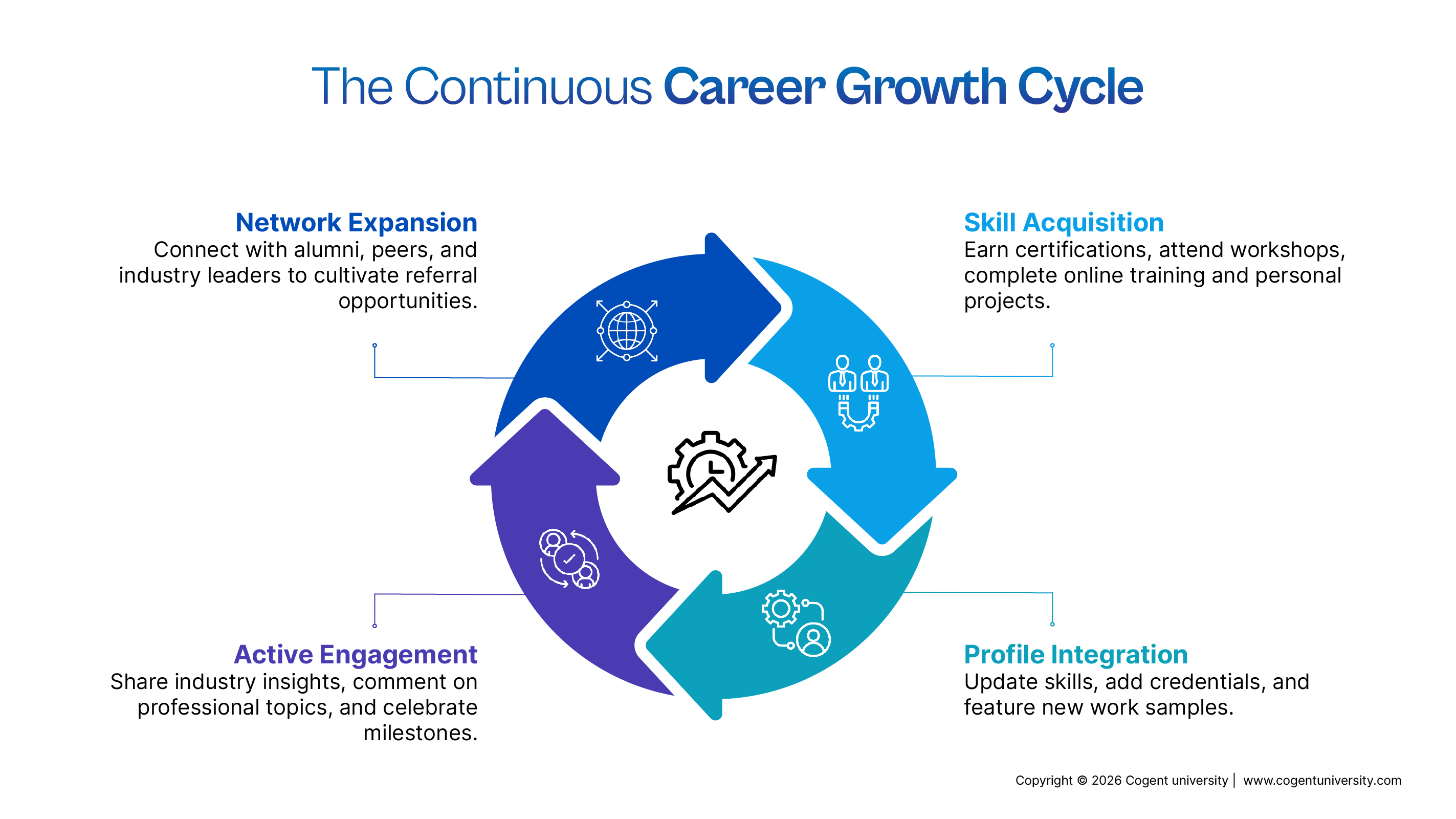
LinkedIn provides several opportunities to showcase your commitment to learning. Certifications, training programs, workshops, online courses, and professional development initiatives can all strengthen your profile.
For students and recent graduates, certifications can be particularly valuable because they help bridge the gap between academic knowledge and practical workplace skills.
Learning does not always need to be formal. Personal projects, independent research, volunteer initiatives, and self-directed learning experiences can also demonstrate initiative and curiosity.
Recruiters often view continuous learning as an indicator of long-term career potential.
Leveraging the Featured Section
One of LinkedIn's most powerful features remains surprisingly underutilized.
The Featured section allows you to showcase work samples, presentations, projects, portfolios, articles, and other professional achievements.
This section gives recruiters tangible evidence of your abilities.
Rather than simply claiming to possess certain skills, you can demonstrate them through real examples. A project presentation, research report, design portfolio, writing sample, or case study can help recruiters better understand your capabilities.
For candidates with limited professional experience, this section can be particularly impactful because it provides proof of initiative, effort, and practical application of knowledge.
The Featured section transforms your profile from a static summary into a dynamic showcase of your work.
Building a Meaningful Professional Network
LinkedIn was originally designed as a networking platform, and networking remains one of its greatest strengths.
Many opportunities are filled through referrals, recommendations, and professional connections before they ever appear on job boards.
Building a strong network does not mean sending connection requests to thousands of strangers. Effective networking focuses on creating meaningful professional relationships.
Connect with classmates, professors, alumni, industry professionals, internship supervisors, mentors, and colleagues. Engage with their content, participate in discussions, and contribute thoughtful insights when possible.
Networking should not be viewed solely as a job-search activity. Instead, it should be approached as a long-term investment in professional growth.
Strong professional relationships often lead to mentorship opportunities, industry insights, referrals, and career guidance.
Staying Active on the Platform
A well-optimized profile is important, but visibility also depends on activity.
Recruiters often notice candidates who engage regularly with industry-related content. Active users tend to appear more involved, informed, and connected to their professional communities.
You do not need to post every day or become a social media influencer. Even occasional engagement can improve visibility.
Sharing industry articles, discussing learning experiences, celebrating milestones, commenting on professional topics, and participating in conversations can help maintain an active presence.
Consistent engagement signals curiosity and professional interest. It also increases the likelihood that recruiters will encounter your profile through their networks and searches.
Avoiding Common Mistakes
Many LinkedIn profiles fail to make an impact because of avoidable mistakes.
Incomplete profiles are among the most common issues. Missing sections can create the impression that a candidate is disengaged or lacks attention to detail.
Outdated information is another problem. Profiles should be updated regularly to reflect current experiences, achievements, certifications, and career goals.
Generic language can also reduce effectiveness. Recruiters review countless profiles every week, making it important to communicate your unique value clearly.
Spelling errors, poor formatting, inconsistent information, and irrelevant content can undermine professionalism.
The most effective profiles are clear, focused, authentic, and easy to understand.
Looking Ahead: The Future of LinkedIn Recruiting
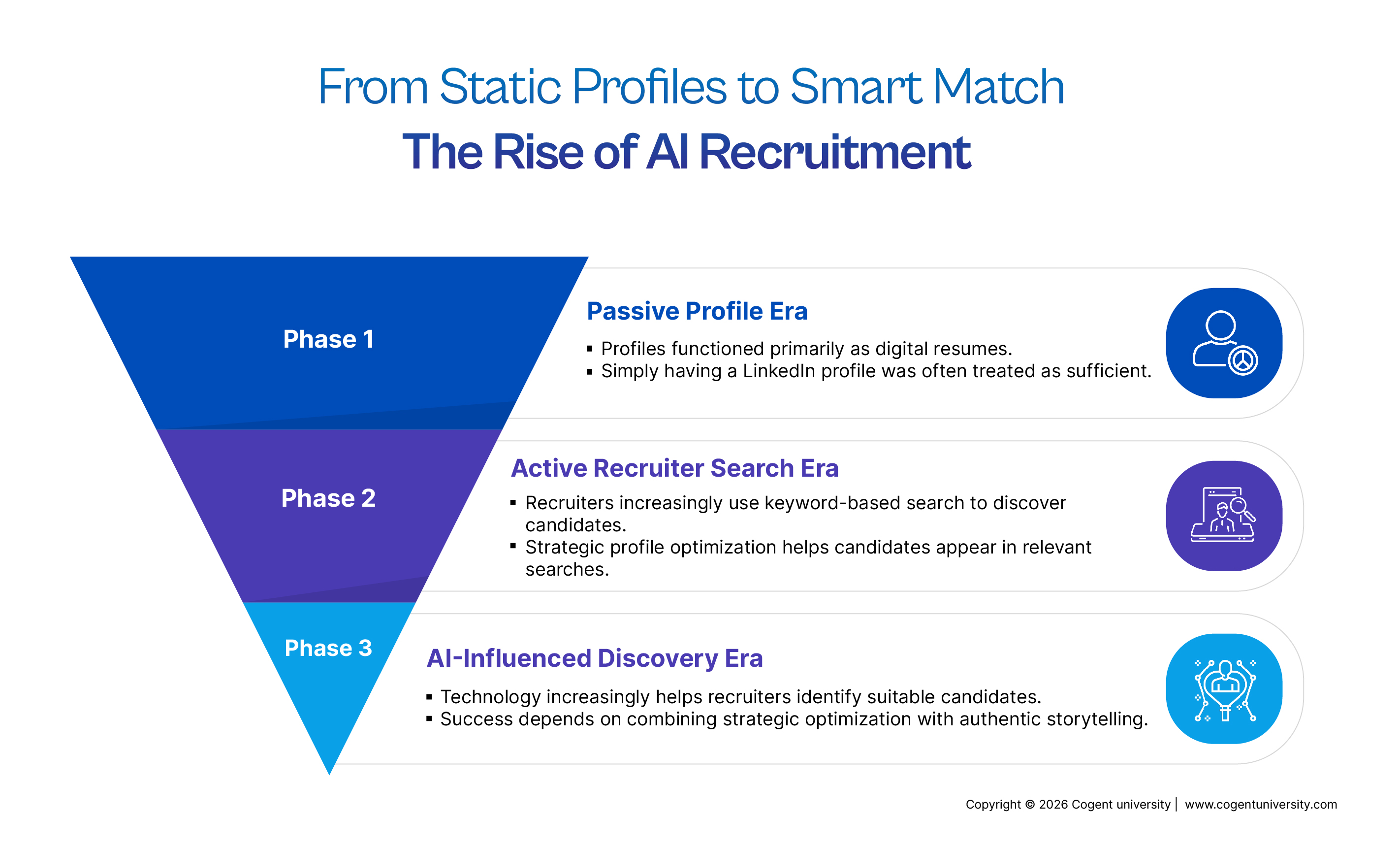
As artificial intelligence continues to influence hiring practices, LinkedIn optimization is likely to become even more important.
Recruiters increasingly rely on technology to identify suitable candidates quickly. Profiles that clearly communicate relevant skills, experiences, and career interests are more likely to perform well in these search environments.
At the same time, authenticity remains essential. While optimization improves visibility, recruiters still want to understand the person behind the profile. They want to see evidence of ambition, growth, curiosity, and professionalism.
The strongest LinkedIn profiles combine strategic optimization with genuine storytelling. They help recruiters find candidates while also giving them compelling reasons to connect.
Conclusion
LinkedIn has evolved into one of the most influential tools in modern career development. For job seekers, students, and early-career graduates, it offers far more than a place to store professional information. It serves as a personal brand platform, networking hub, portfolio showcase, and recruiter discovery tool all at once.
Optimizing your LinkedIn profile is not about impressing algorithms alone. It is about presenting a clear and compelling picture of who you are, what you have accomplished, and where you want your career to go. Every section of your profile contributes to that story, from your photo and headline to your experience, skills, certifications, and activity.
In a competitive hiring environment where recruiters often make decisions within minutes, a strong LinkedIn profile can become a significant advantage. It can help you appear in recruiter searches, strengthen your professional credibility, expand your network, and open doors to opportunities that might otherwise remain out of reach.
For anyone entering the workforce or seeking new opportunities, investing time in LinkedIn optimization is one of the most practical and effective career moves you can make. The effort you put into building a professional and authentic online presence today can create opportunities that shape your career for years to come.
Your LinkedIn profile gets you noticed. The right skills help you stand out. Build your career with Cogent University.
Build skills. Get career-ready