

Understanding the Hidden Reasons Behind Job Application Rejections in Today's Hiring Market
You spend hours perfecting your resume.
You update your education, add your latest internship, list relevant skills, and carefully review every line for errors. You adjust the formatting, improve your professional summary, and make sure everything looks polished. Then you start applying.
At first, it feels exciting. Every application feels like a step closer to your next opportunity. Five applications turn into twenty. Twenty become fifty. Before long, you've submitted your resume to more than a hundred jobs. Then the waiting begins.
Days pass without a response. Weeks go by. Your inbox stays quiet. Sometimes you receive an automated rejection email. More often, you hear nothing at all. Eventually, a frustrating question starts to creep into your mind:
"Am I not qualified enough?"
For many job seekers and recent graduates, that question feels personal. After all, you've invested years in your education, completed internships, worked on projects, and developed valuable skills. Yet despite your efforts, interviews remain elusive.
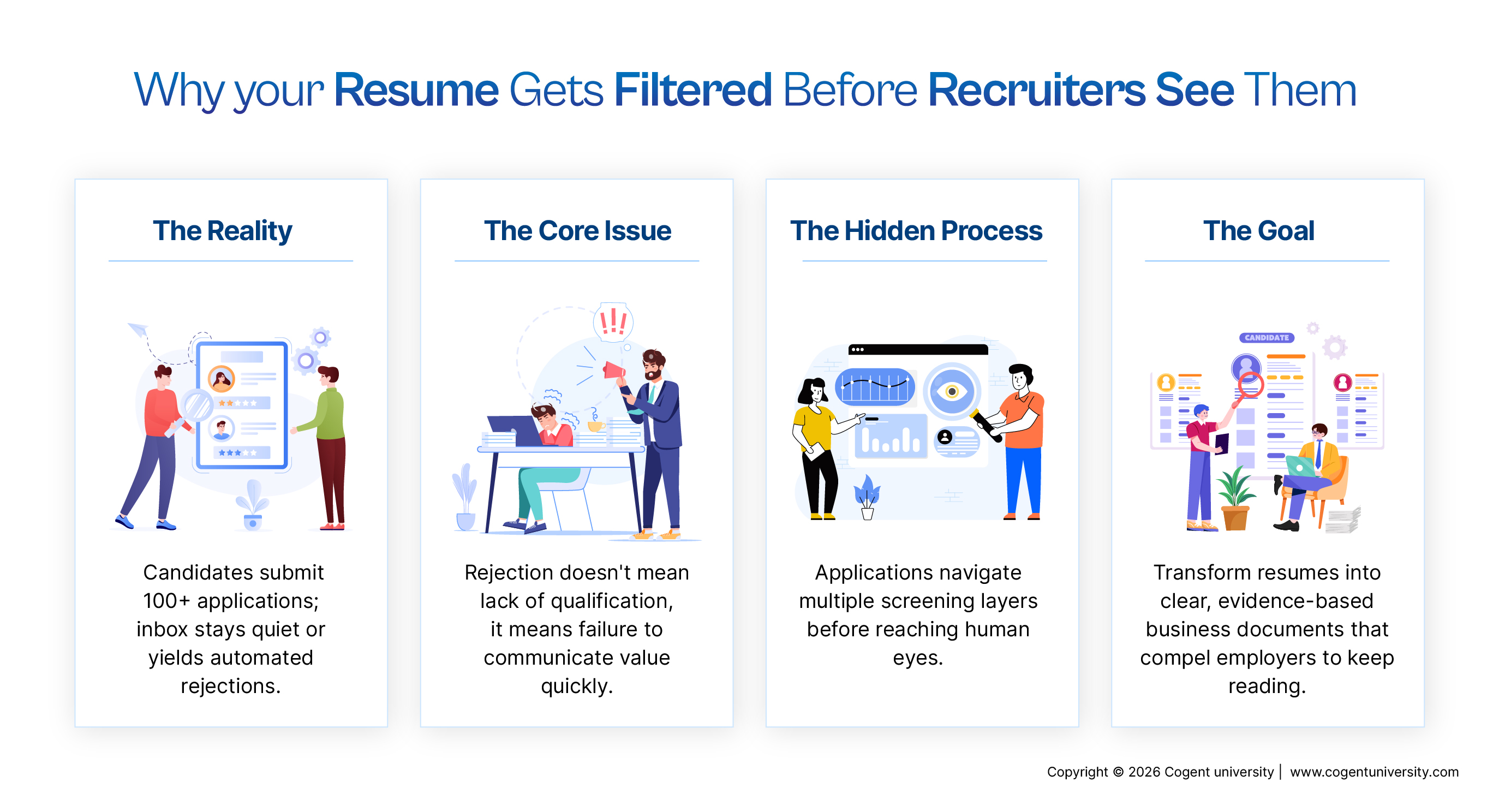
The surprising reality is that many qualified candidates never get rejected by a recruiter because a recruiter never sees their resume in the first place.
In today's hiring environment, resumes often go through multiple layers of screening before reaching a hiring manager or recruiter. Understanding how this process works and the mistakes that can prevent your application from moving forward can dramatically improve your chances of getting noticed.
The good news is that being overlooked does not necessarily mean you lack qualifications. In many cases, it means your resume is failing to communicate your value in a way employers can quickly recognize.
The Job Market Has Changed Faster Than Most Candidates Realize
The hiring landscape today looks very different from what it did even a few years ago.
Employers are receiving significantly more applications than before. Remote and hybrid work opportunities have expanded the talent pool for many organizations, allowing candidates from different cities and regions to compete for the same position. At the same time, economic uncertainty has made companies more selective about who they hire.
For graduates entering the workforce, this creates a unique challenge.
You are no longer competing only with classmates from your university. You may be competing with graduates from hundreds of other institutions, career changers looking for new opportunities, and professionals with a few years of experience who are applying for similar positions.
As a result, application volume has exploded.
A role that once attracted fifty applicants may now receive several hundred. Popular entry-level positions in marketing, business operations, communications, customer success, administration, human resources, project coordination, and sales often attract applications within hours of being posted.
Recruiters simply do not have enough time to review every application in detail.
Imagine receiving 800 resumes for a single opening. Even spending two minutes reviewing each application would require more than 26 hours of work before scheduling a single interview. This is why companies rely on structured screening processes to narrow down the applicant pool.
While these systems help employers manage large numbers of applications, they also create obstacles for candidates who fail to present their qualifications effectively.
Your Resume Is Not Being Read the Way You Think
One of the biggest misconceptions among job seekers is believing that recruiters carefully read every word on every resume. In reality, the initial review process is often much faster.
Recruiters are usually searching for evidence that a candidate matches the requirements of the role. If they cannot quickly identify relevant experience, skills, or qualifications, they move on to the next application. This means your resume has one primary purpose:
To make it immediately obvious that you are a strong fit for the position. Unfortunately, many resumes focus more on what candidates want than what employers need. Consider a statement such as:
"Motivated individual seeking an opportunity to grow professionally while contributing to organizational success."
While there is nothing technically wrong with it, the statement provides little information about the candidate's qualifications. Now compare it with:
"Recent business graduate with internship experience in customer service, project coordination, and event management." The second statement immediately gives employers useful information.
The easier it is for employers to understand your background, the more likely your resume is to move forward.
Why Generic Resumes Are Losing the Battle
One of the most common mistakes job seekers make is using the same resume for every application. This strategy feels efficient, especially when you're applying to dozens of jobs each week. However, it often leads to disappointing results.
Hiring managers are not looking for candidates who appear generally qualified. They are looking for candidates who appear specifically qualified for the role they need to fill. Imagine a graduate applying for both customer service and administrative assistant positions using the exact same resume.
The customer service employer may want evidence of communication skills, conflict resolution, relationship building, and customer interaction. The administrative employer may be looking for scheduling, organization, record management, and coordination experience.
If the resume treats both opportunities identically, neither employer sees a clear connection between the candidate and the role. This doesn't mean rewriting your resume from scratch every time. It means adjusting key sections, highlighting the most relevant experiences, and reflecting the priorities of the specific position.
The strongest resumes feel tailored because they help employers quickly recognize alignment.
The Keyword Mistake That Costs Candidates Interviews
Many people hear discussions about resume keywords and assume the topic is highly technical. In reality, it's much simpler than that.
Keywords are simply the words employers use to describe the skills and qualifications they are seeking.
When a job posting repeatedly mentions customer service, project coordination, scheduling, relationship management, event planning, communication, or stakeholder engagement, those terms matter. Yet many candidates describe similar experiences using completely different language.
For example, a job description may emphasize customer support.
A candidate may write:
"Assisted clients with questions and concerns."
The experience is clearly relevant, but the language differs from what the employer is seeking. Employers want resumes that speak their language.
This does not mean stuffing your resume with buzzwords. It means carefully reviewing job descriptions and ensuring your experience is described using terminology that accurately reflects both your background and the employer's needs.
Formatting Matters More Than You Think
Many graduates spend hours making their resumes visually impressive. They download elaborate templates, add graphics, use multiple columns, include icons, and experiment with creative layouts.
While these designs may look attractive, they can sometimes hurt more than help. A resume is not a marketing brochure. It is a business document.
The purpose of your resume is not to impress employers with design. It is to help them quickly understand your qualifications.
Complex layouts often make information harder to find.
Recruiters typically spend only a short amount of time reviewing applications initially. If they struggle to locate important information, they may move on before fully understanding your background.
Simple, clean, and organized resumes consistently outperform overly designed alternatives because they prioritize clarity. And in hiring, clarity wins.
Experience Alone Is No Longer Enough
Many candidates make another critical mistake. They describe responsibilities instead of achievements. For example:
"Responsible for managing social media accounts."
This tells employers what the candidate did, but not whether they did it well. A stronger version might read:
"Managed social media accounts for a student organization and increased event attendance through targeted promotional campaigns."
The second statement provides evidence of impact. Employers increasingly want proof that candidates can create value. This is especially important for graduates who may not have extensive work histories.
The good news is that valuable experiences can come from many places.
Internships, volunteer projects, academic assignments, leadership positions, campus organizations, freelance work, and part-time jobs all provide opportunities to demonstrate results.
The key is highlighting outcomes rather than simply listing responsibilities.
The Experience Gap Isn't Always About Experience
Many graduates become discouraged when they see entry-level positions asking for experience. It can feel like a contradiction.
How are you supposed to gain experience if employers refuse to hire candidates without it? The reality is that employers are often looking for evidence of readiness rather than years of employment.
A graduate who completed internships, participated in competitions, volunteered for projects, and held leadership roles often appears more prepared than someone who focused exclusively on coursework.
Consider two candidates with identical degrees. One resume lists academic achievements and coursework. The other includes an internship, volunteer experience, leadership positions, and project-based accomplishments.
Even though both candidates recently graduated, one has demonstrated a greater ability to apply skills in real-world situations.
That difference frequently influences hiring decisions.
Why Skills-Based Hiring Is Reshaping Recruitment
One of the biggest hiring trends today is the growing emphasis on skills-based hiring.
Employers are placing greater importance on demonstrated abilities rather than relying solely on degrees, job titles, or years of experience.
This shift creates opportunities for graduates, career changers, and individuals with non-traditional backgrounds.
However, it also changes how resumes need to be written. Listing skills alone is no longer enough.
Almost every candidate claims to have strong communication skills, leadership abilities, problem-solving capabilities, and teamwork experience. What separates successful candidates is their ability to prove those skills through examples.
Instead of writing:
"Excellent communication skills."
Show where those skills were used.
For example:
"Coordinated communication between student organizations, sponsors, and university administrators during a fundraising event attended by over 300 participants."
Evidence creates credibility.
And credibility creates opportunities.
Why Applying to Hundreds of Jobs Often Backfires
Many job seekers approach their search with a volume-first mindset.
Apply faster.
Apply everywhere.
Apply to as many positions as possible.
While activity is important, quantity alone rarely guarantees results.
Submitting 200 generic applications often produces fewer interviews than submitting 40 targeted applications.
Employers notice when resumes appear relevant.
Recruiters notice when candidates demonstrate a genuine understanding of the role.
The goal is not simply to maximize applications.
The goal is to maximize interview opportunities.
Those are two very different strategies.
Candidates who take the time to customize applications, research employers, and highlight relevant experiences often see better outcomes despite applying to fewer jobs.
Networking Still Plays a Powerful Role
Technology has changed many aspects of hiring, but one thing remains true:
People hire people.
Networking continues to be one of the most effective ways to uncover opportunities.
Unfortunately, many graduates misunderstand what networking actually means.
Networking is not asking strangers for jobs.
It is building professional relationships.
It involves connecting with alumni, attending industry events, participating in professional communities, engaging with mentors, and learning from people already working in your field.
Many successful candidates secure interviews because someone referred them, introduced them to a hiring manager, or informed them about an opening before it became highly competitive.
A strong network cannot replace a good resume.
But it can significantly increase the chances that your resume gets noticed.
The Resume Mistakes That Continue to Eliminate Qualified Candidates
Even highly capable candidates make avoidable mistakes that hurt their chances.
Typos remain surprisingly common.
Inconsistent formatting can make resumes appear careless.
Outdated contact information can prevent employers from reaching candidates.
Long resumes filled with irrelevant details make it difficult for recruiters to identify key qualifications.
Some candidates include every job they have ever held, even when those experiences have little connection to their career goals.
Others fill their resumes with generic buzzwords that sound impressive but provide little substance.
The strongest resumes are usually straightforward.
They focus on relevant experiences.
They communicate value clearly.
And they tell a coherent story about where the candidate has been and where they are headed.
Your Resume Is More Than a Document - It's Your Professional Story
At its core, a resume is not just a list of jobs, skills, and accomplishments.
It is your professional story.
Every internship, volunteer project, leadership role, academic achievement, freelance assignment, and part-time job contributes to that story.
The most successful resumes help employers understand not only what you have done but also what you are capable of doing next.
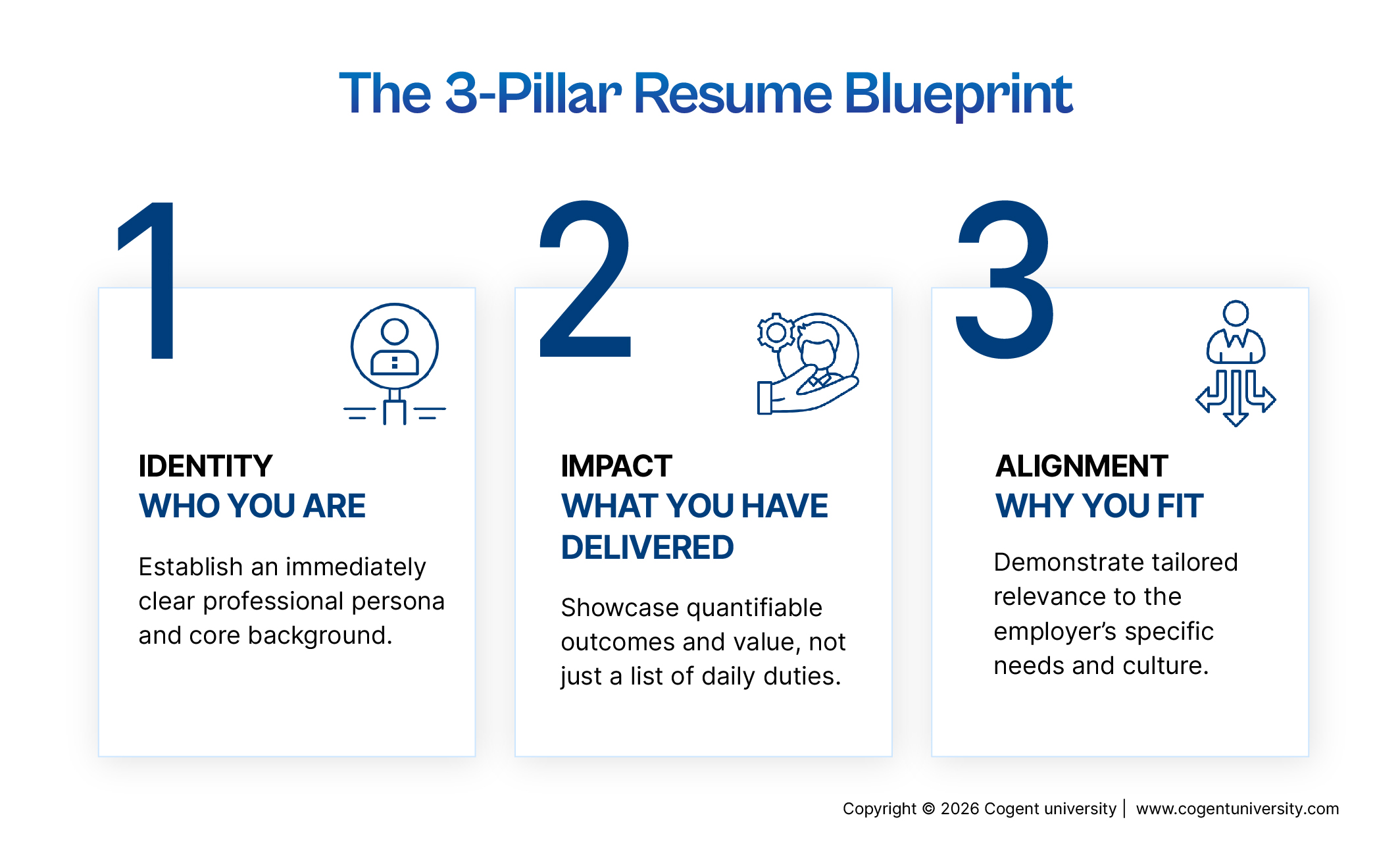
When recruiters finish reading your resume, they should immediately understand three things:
Who you are.
What you have accomplished.
Why you are a strong fit for the position.
If those answers are unclear, even highly qualified candidates can be overlooked.
Final Thoughts
If your resume is getting filtered before a recruiter sees it, do not automatically assume that you are unqualified. Today's hiring environment is more competitive than ever, and many talented candidates struggle because their resumes fail to communicate their value effectively. The encouraging news is that this problem is often fixable.
A clear, focused resume that highlights relevant experience, demonstrates impact, reflects the language of the role, and tells a compelling professional story can dramatically improve your chances of securing interviews.
For graduates and early-career professionals, success is not simply about gaining experience. It is about learning how to present that experience in a way employers understand and appreciate. In a crowded job market, getting noticed is not just about what you have done. It is about making sure employers can see the value you bring from the moment they open your resume. Because before anyone can hire you, they first need a reason to keep reading.
Ready to Get Noticed?
Build the skills, confidence, and career readiness employers are looking for with Cogent University. Prepare for more than applications, prepare for your next opportunity.




.png)
